TRANSFORMING HOMES SINCE 2007
MADE IN BRITAIN
NATIONWIDE SUPPLY & INSTALL SERVICE
Overview
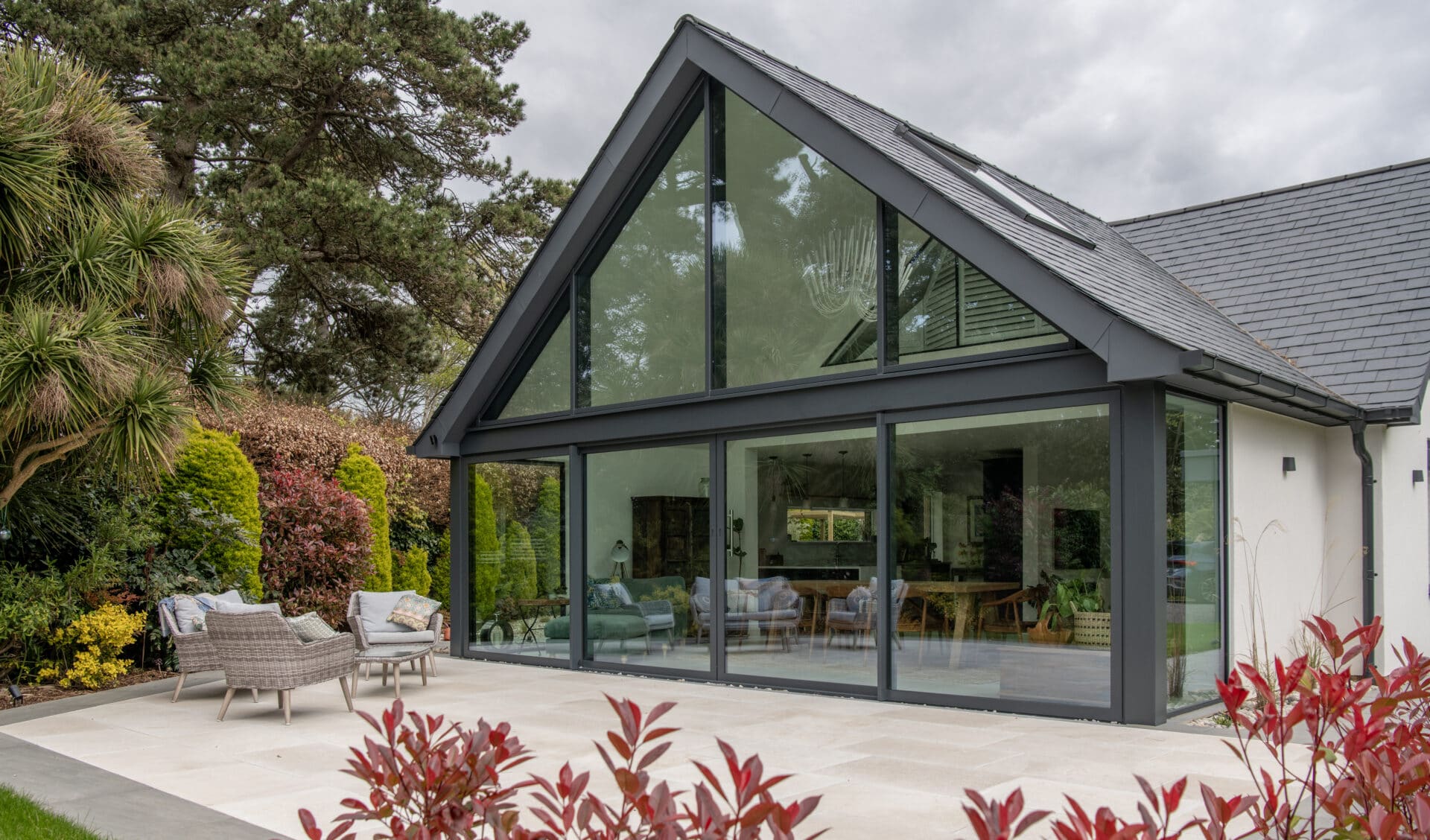
Choosing the right sliding door panel layout depends on your opening size, the view you want to keep and how much access you need to the garden.
A 2-panel design keeps sightlines simple with fewer vertical frame lines. A 3-panel sliding patio door on a triple track can provide a wider clear opening, while a 4-panel layout works well across broad rear extensions. For extremely large openings and huge glass walls, 6-panel sliding doors can create an impressive connection between inside and outside.
Express Bi-folding Doors offers bespoke aluminium sliding doors across its XP Glide, XP Slide Panoramic Plus, XP Glide R and XP Glide LS20 ranges, with options for slim sightlines, smooth movement, secure performance and year-round comfort.
Sliding door panels affect how much glass you see, how your doors open and how your home connects with the garden. The right layout is not only about width. It also affects sightlines, ventilation, frame depth, panel weight and everyday use. At Express Bi-folding Doors, many homeowners begin by asking how to choose the best sliding door for their property. The answer usually comes down to a careful balance between view, access and the size of the structural opening.
With bespoke sliding doors available in 2, 3, 4, 6 and even 8-panel layouts, there is a configuration to suit both the property and the way you live. The key is matching the number of sliding door panels with the right track system, frame detail and glass specification.
Why does the number of sliding door panels matter?
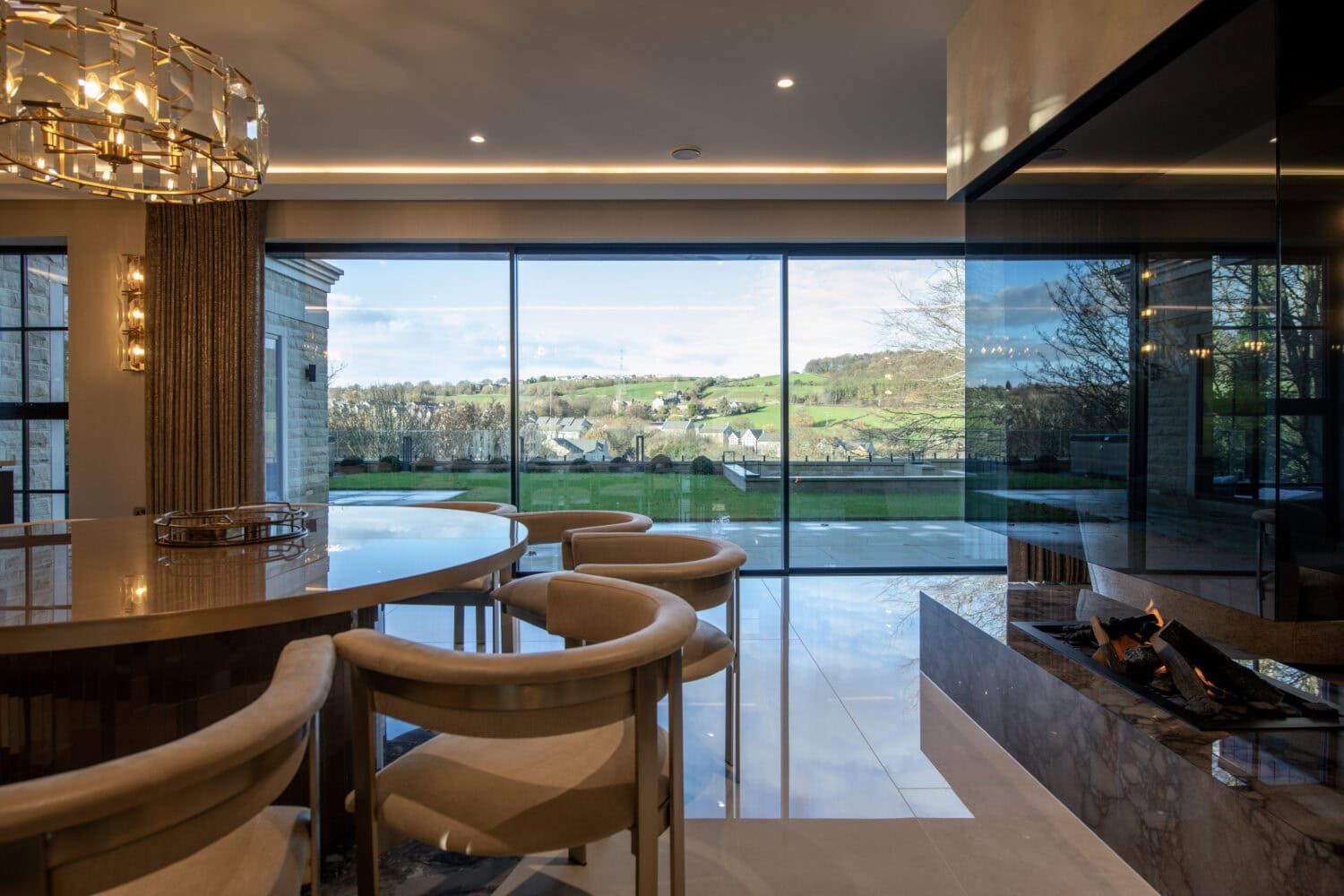
The number of sliding door panels affects more than the width of the doors. It changes how much glass you see, how many vertical lines appear and how wide the opening can be.
In simple terms:
- Fewer panels usually mean larger panes of glass
- More panels can work better across wider openings
- Twin track sliding doors usually suit 2 or 4-panel layouts
- Triple track sliding doors usually suit 3 or 6-panel layouts
- Monorail sliding doors can reduce visible framing on suitable designs
- Quadruple track sliding doors can help achieve a larger clear opening on specialist projects
Consider the details
Track depth, panel weight and opening direction all need to be considered. This is why the best answer depends on your home, not just the size of the opening.
Are 2 panel sliding door panels right for smaller openings?
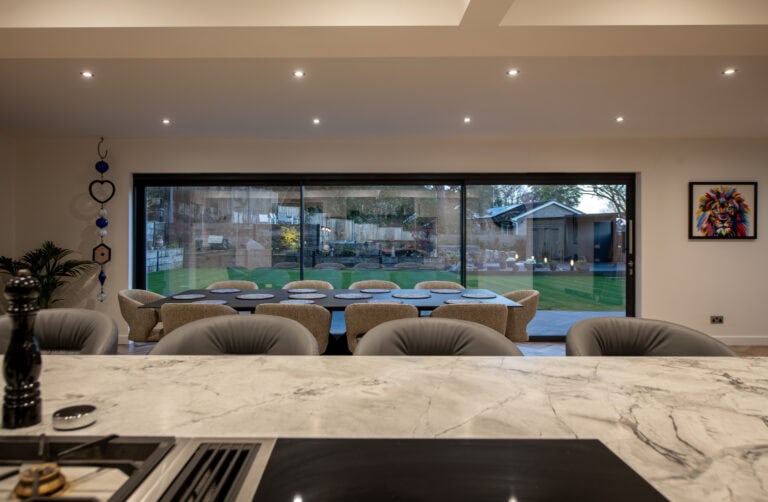
A 2-panel layout is often a strong choice for smaller openings, kitchen diners and replacement sliding patio doors. It usually has one fixed panel and one moving panel. This gives a clean view because there is only one main vertical aluminium line between two large panes of glass.
On twin track sliding doors, you can usually open around half of the total width.
This layout often suits:
- Smaller rear extensions
- Garden facing living rooms
- Kitchen dining spaces
- Patio door replacements
- Homes where the view matters most
Our XP Glide sliding door is a popular choice for this type of project. It offers slim sightlines, smooth sliding movement and strong all-round performance. If minimal visible framing is a priority, our XP Slide Panoramic Plus frameless sliding doors are fantastic, as the system uses structurally bonded glass, a concealed outer frame and a 25mm vertical sightline.
When does a 3-panel sliding patio door work best?
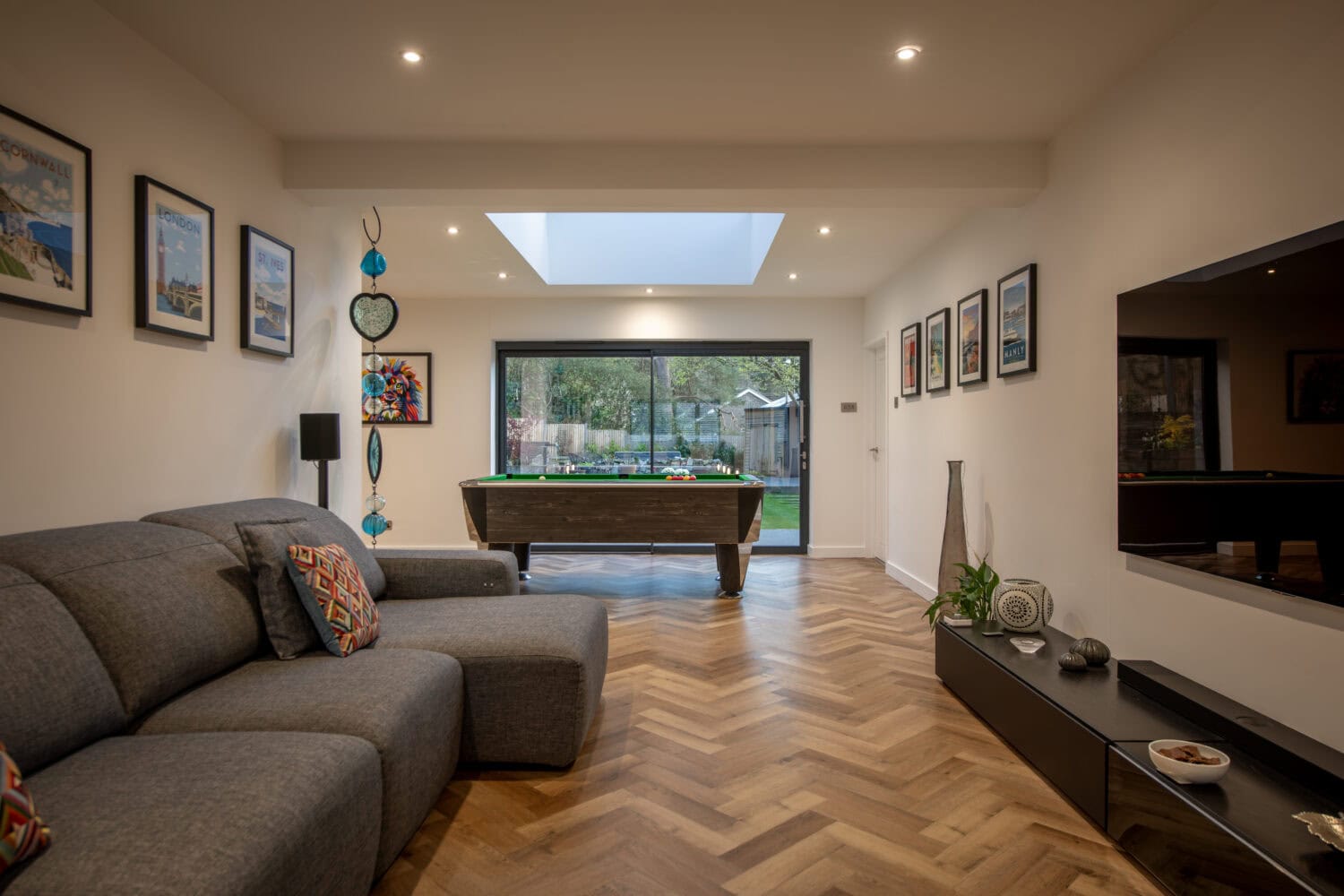
When you want more open access to the garden, a 3-panel sliding patio door is worth considering. On triple track sliding doors, 2 sliding door panels can move behind the third fixed panel, or all panels can slide with no fixed panel in place.
This can give around two-thirds clear opening, which is more than a typical twin track design.
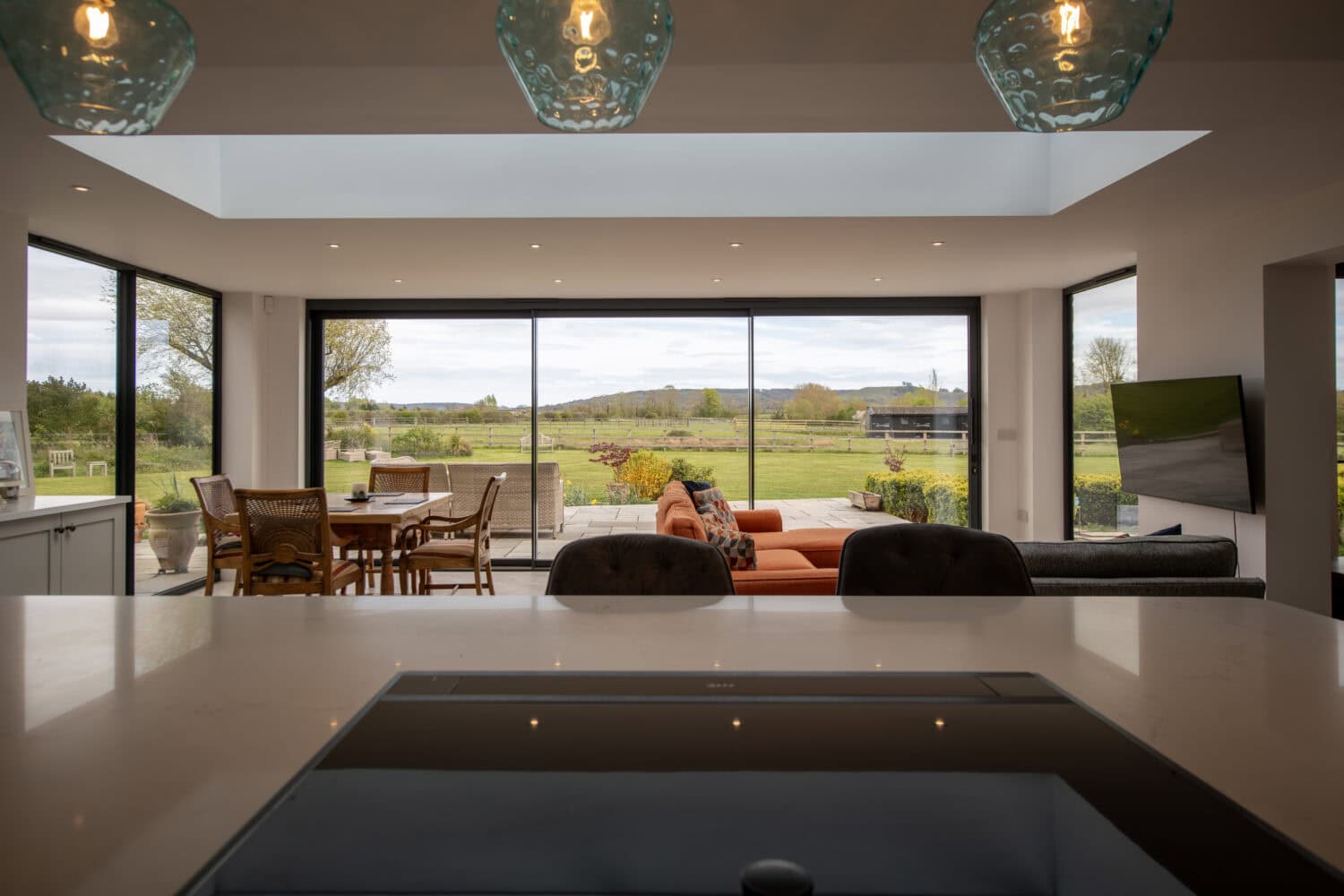
A 3-panel sliding glass patio doors layout may be right if:
1. You have a wider opening
2. You want more garden access
3. You have space for a deeper triple track frame
4. You are planning an open plan kitchen or dining area
5. You want large glass panels without moving to a 4 or 6-panel design
It’s a great middle ground for many homes, especially where the doors will be used often in warmer months.
Is a 4-panel sliding door best for wide rear extensions?
A 4-panel sliding door is often a strong choice for wider rear elevations, especially where you want the opening to feel balanced. The most common layout has 2 fixed outer panels and 2 centre panels that slide left and right.
This gives a generous central opening, with large areas of glass on both sides. It is one reason 4-panel sliding patio doors are so popular for kitchen extensions, open plan layouts and larger living spaces facing the garden. For homes where the aim is even more glass, monorail sliding doors may also be considered, as they pair fixed glass with a moving panel to help reduce visible framing, this solution is available with both 2 and 4 panel sliding doors.
A 4-panel sliding glass door may suit you if you want:
- Balanced access through the centre
- Wide glass areas on either side
- A twin track layout
- Larger panes without moving to a 6-panel design
- A strong connection between the room and garden
For larger homes, 4-panel aluminium sliding patio doors can keep the room bright and open while still feeling easy to live with. If the panels are bigger, heavier or exposed to more challenging weather, the operating system becomes just as important as the panel layout.
That’s where our XP Glide R lift and slide system can be a great fit. The handle action helps lift each panel before it moves, making larger sliding door panels easier to operate day to day while keeping the clean, wide glazed look that makes 4-panel designs so appealing.

When are 6-panel sliding doors the right answer?
6-panel sliding doors are usually chosen for very wide openings. They often sit on a triple track system, with panels opening in the centre and stacking to each side.
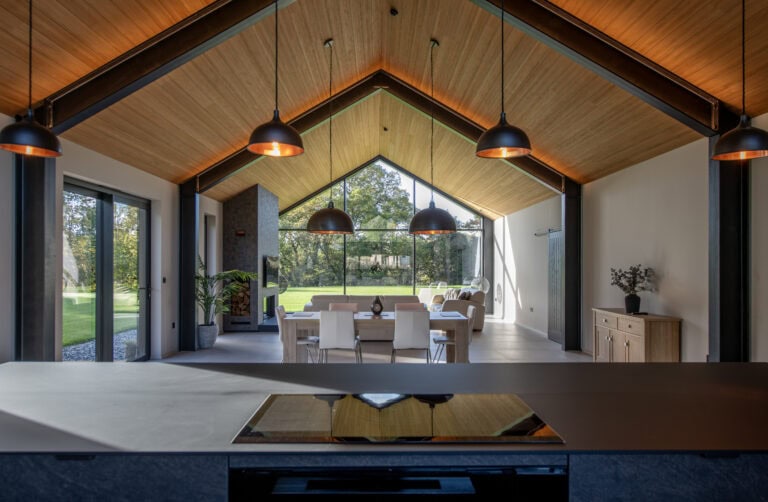
This can work beautifully for expansive sliding doors, especially in larger extensions and architect-led homes where the glazing forms a major part of the design. For even wider apertures, 8-panel layouts or quadruple track sliding doors may also be considered, depending on the structure, access requirements and desired clear opening.
With bigger layouts, the detail becomes even more important. A manufacturer and installer needs to carefully consider:
- Glass weight
- Panel size
- Track depth
- Drainage
- Threshold design
- Site access
- Structural support
This helps make sure the finished doors feel easy to use as well as impressive to look at. When you choose Express, our end-to-end service means every stage is considered, from early design advice and showroom guidance through to survey, manufacture and installation. No matter how large your sliding doors are, the aim is always the same: a made-to-measure result that looks right, operates smoothly and performs for years to come.
Expert insight from Express Bi-folding Doors
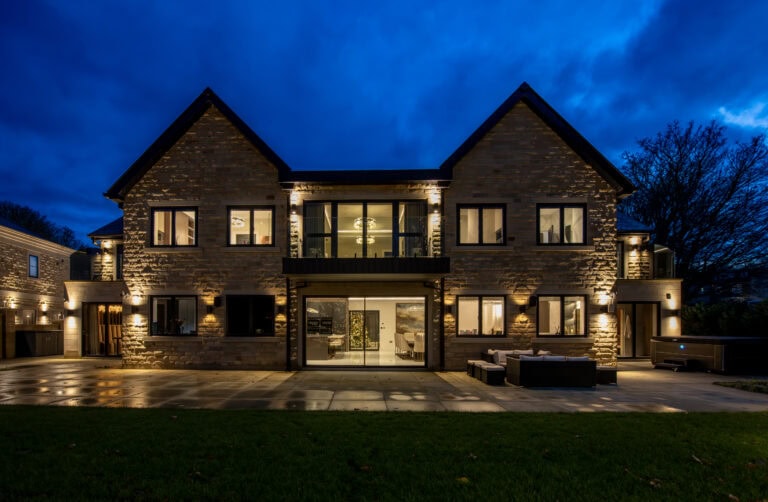
“We recently worked on a detached home in Surrey where the owners were adding a large double height rear extension, replacing the glazing throughout and linking the new space to a landscaped garden,” says Steve Bromberg, Managing Director at Express Bi-Folding Doors. “After visiting our Weybridge showroom, they chose a mix of 3-panel and 2-panel XP Glide patio doors. The result was around 20 square metres of panoramic glazing, interrupted by just three 20mm vertical transoms, plus a 4-metre clear opening through the triple track door.”
“This is exactly why sliding door panels need careful thought. The right configuration is not just about filling an opening. It affects the view, the amount of access, the threshold detail and how naturally the home connects with the garden.”
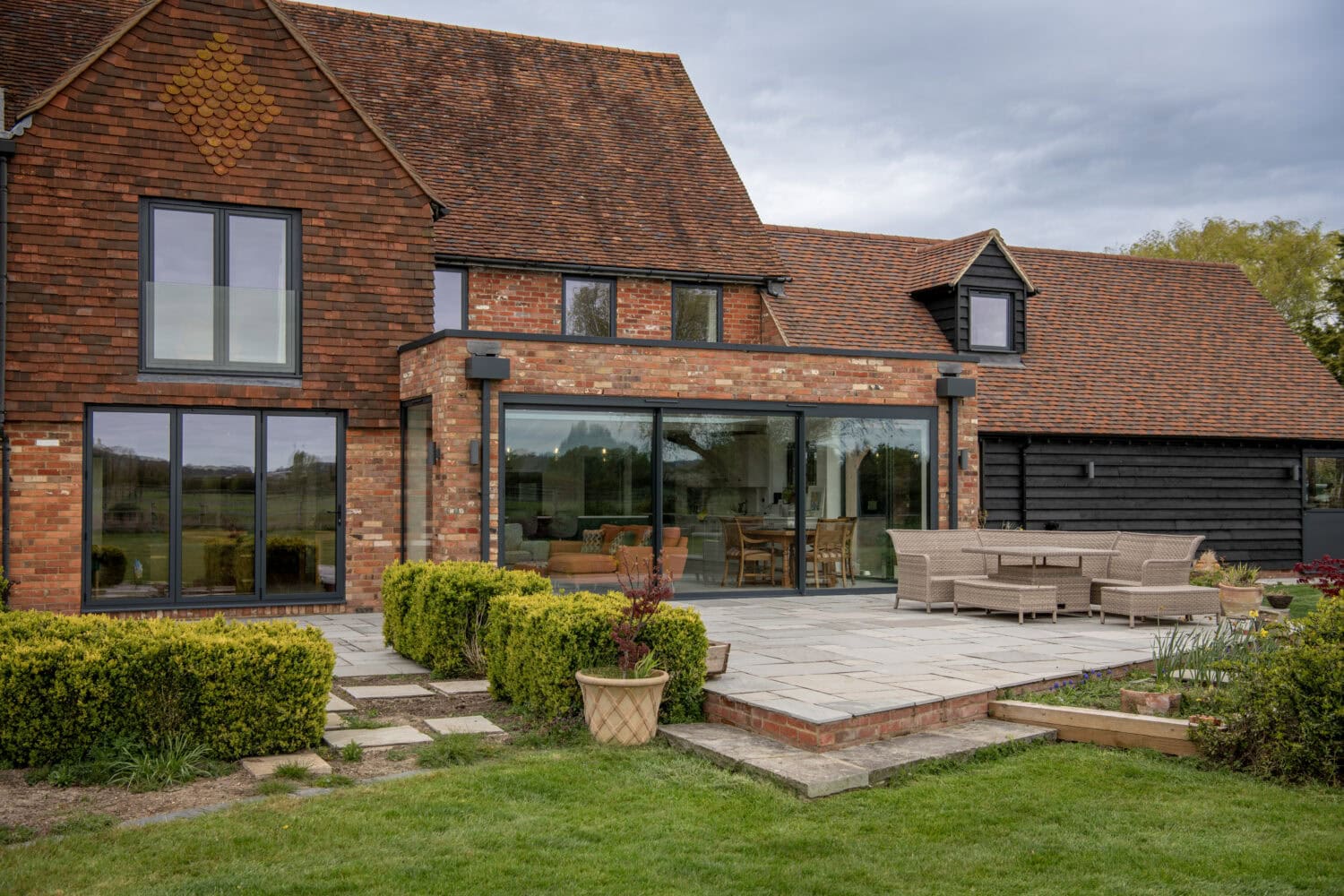
How do you choose the best sliding door panels?
Start with the room, not the product. Think about how often you will open the doors, where people will walk and how much of the garden you want to see.
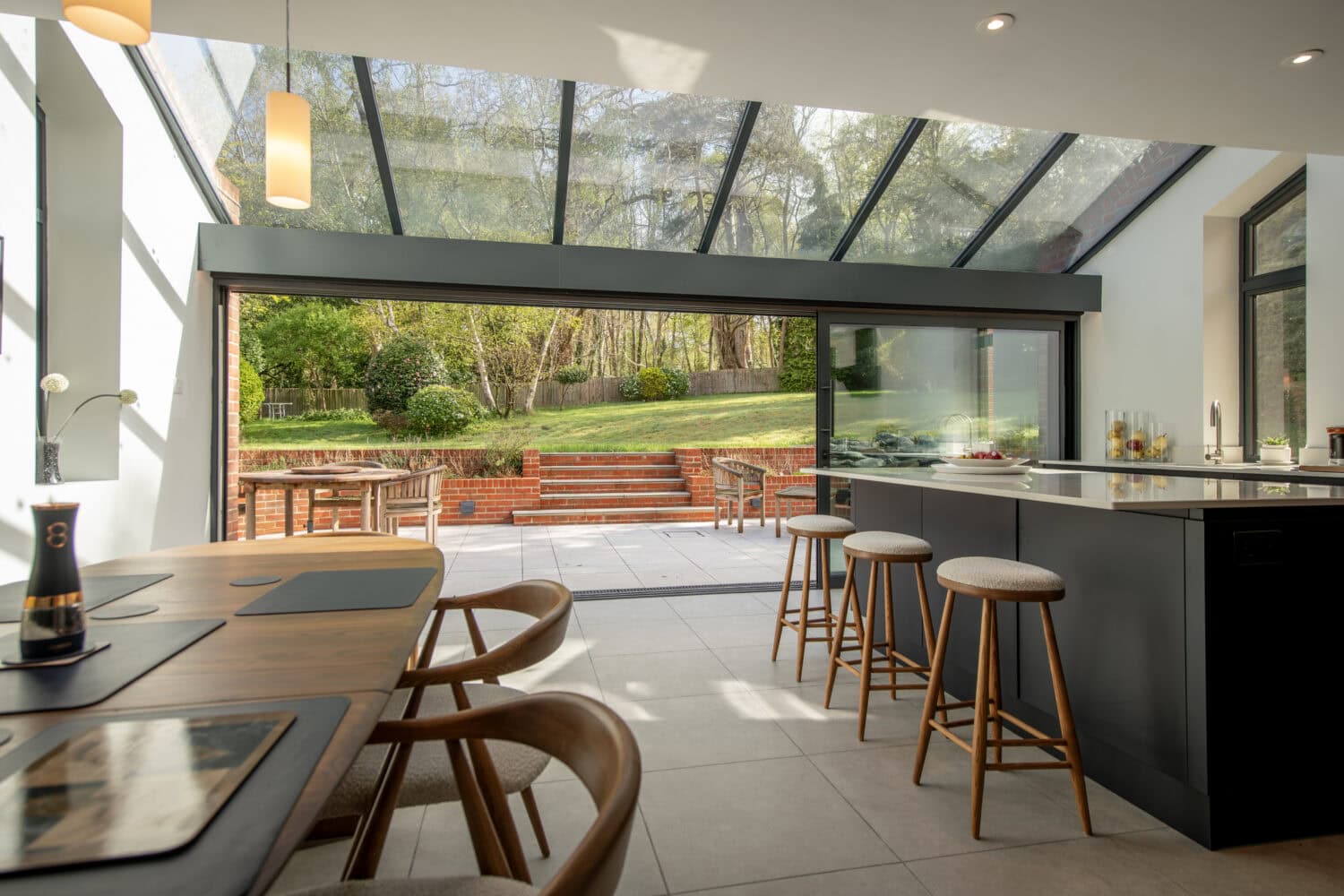
A simple way to decide is:
1. Choose 2-panel sliding door panels for smaller openings and fewer frame lines.
2. Choose a 3-panel sliding patio door if you want a wider clear opening.
3. Choose a 4-panel sliding door for balanced access across a wide extension.
4. Choose 6-panel sliding doors for a broad glass wall.
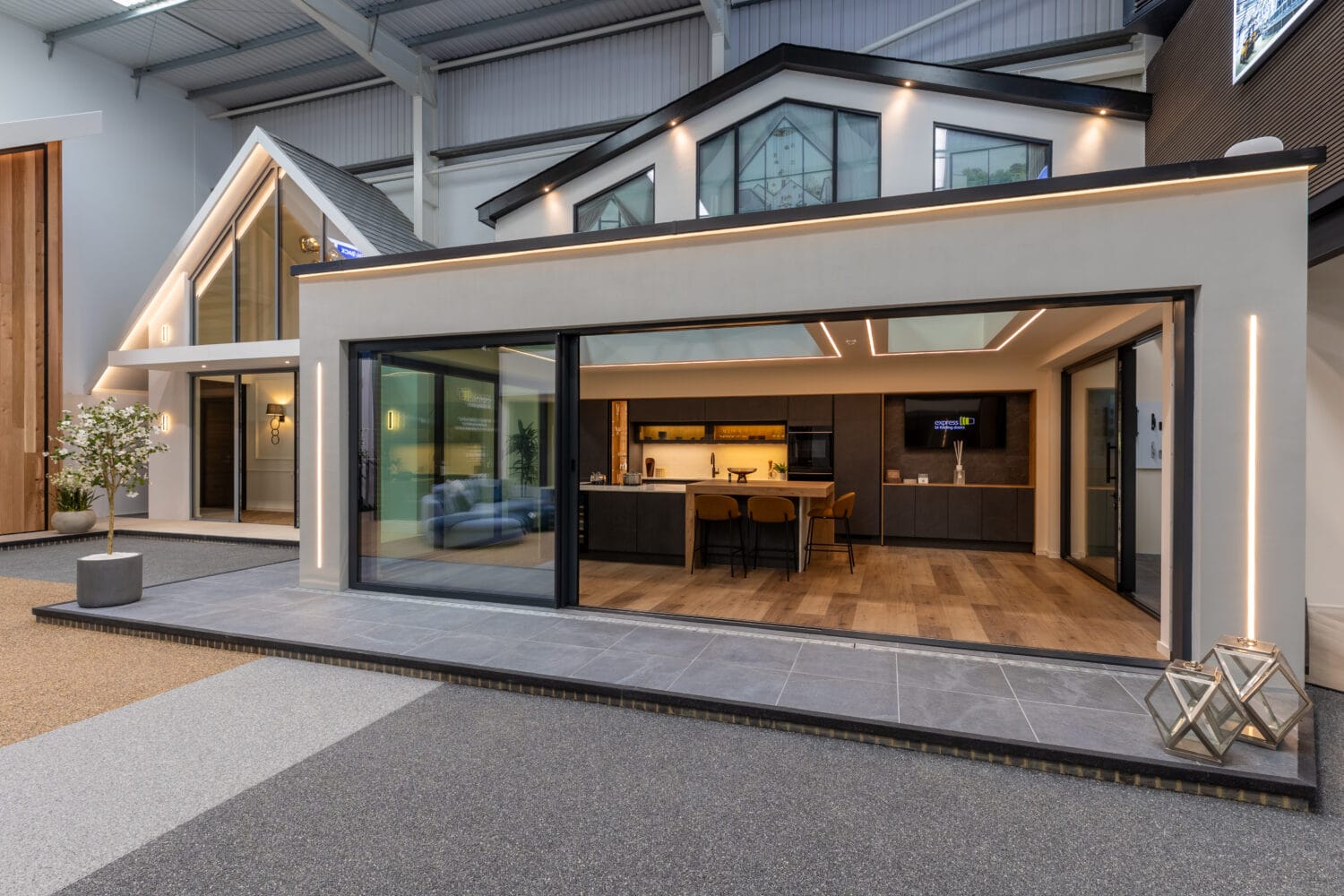
5. Visit a showroom before deciding, as full size displays make panel layouts much easier to compare.
Here at Express, all our aluminium sliding doors are made to measure using thermally broken aluminium and toughened safety glass, with flush threshold options and high-security specifications available, including PAS 24-tested systems. When your doors are installed by our team, they are also backed by our 10-year guarantee.
FAQs
How many sliding door panels can I have?
Most sliding doors are available in 2, 3, 4 or 6-panel layouts. Bespoke sliding doors can be planned around wider or more complex openings.
Are 2 or 3-panel sliding doors better?
A 2-panel door usually gives fewer vertical frame lines. A 3-panel sliding patio door on a triple track can give a wider clear opening.
Are 4-panel sliding patio doors good for extensions?
Yes. A 4-panel sliding door works well across wider openings and can give balanced central access with large, glazed panels at each side.
Do triple track sliding doors open more than twin track sliding doors?
Usually, yes. Twin track sliding doors often give around 50% clear opening, while triple track sliding doors can give up to around two-thirds clear opening.
Are frameless sliding doors completely frame free?
No. Frameless sliding doors still need frames and tracks, but parts of the outer frame can often be hidden within the building structure for a more glass led result.
Can aluminium sliding doors have large glass panels?
Yes. Aluminium sliding doors suit large panes, but glass size, weight, wind exposure and handling all need expert checking.
The right sliding door panel layout comes down to the balance between glass, access, sightlines and everyday use. A 2-panel design gives large panes of glass with fewer vertical lines, while a 3-panel sliding patio door can open up more of the width when used on a triple track. A 4-panel sliding door creates balanced central access across a wider extension, and 6-panel sliding doors suit larger openings where the glazing becomes a key design feature.
Explore the details
Track choice, panel size, threshold detail and installation all matter, especially on bigger projects.
Visiting an Express Bi-folding Doors showroom allows you to compare full-size aluminium sliding doors, frameless sliding doors and various track systems in person before choosing the best configuration for your home.