TRANSFORMING HOMES SINCE 2007
MADE IN BRITAIN
NATIONWIDE SUPPLY & INSTALL SERVICE
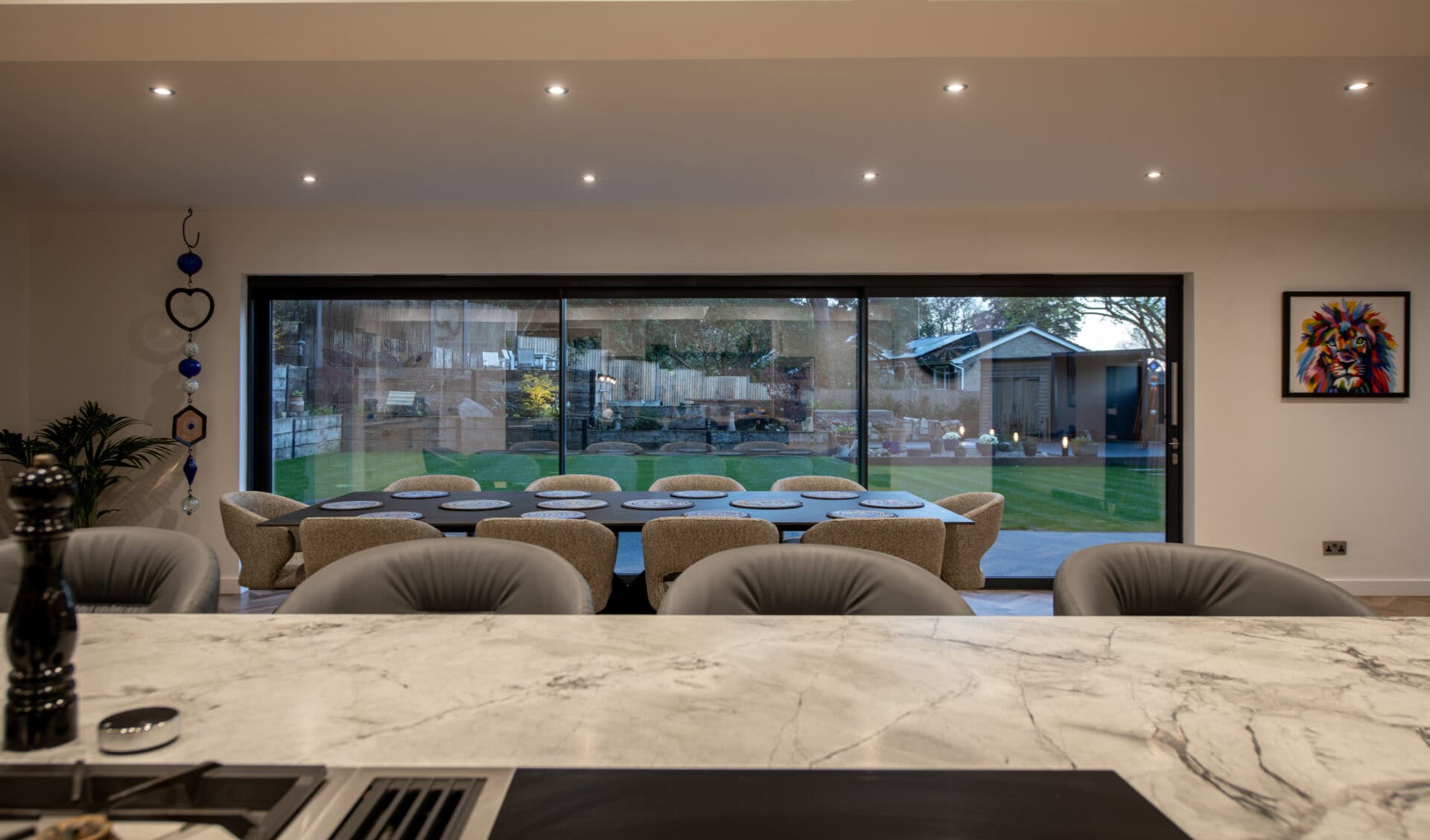
Kitchen sliding doors are one of the most effective ways to open up your home, bringing in more light, improving flow, and strengthening the connection to the garden. For homeowners planning a renovation or updating a kitchen extension, the right glazing choice can influence how the space feels every day.
Sliding doors offer wide glass panels, refined frames, and smooth operation that suit both modern and traditional properties. With careful design, they support a balanced layout that feels calm, bright, and easy to live in.
Here is how kitchen sliding doors can improve your home in a way that feels considered and long lasting.
1) Bring More Natural Light into the Kitchen
Light plays a significant role in how a kitchen feels. Dark or enclosed layouts can feel heavy, especially in older properties or rear extensions with limited glazing.
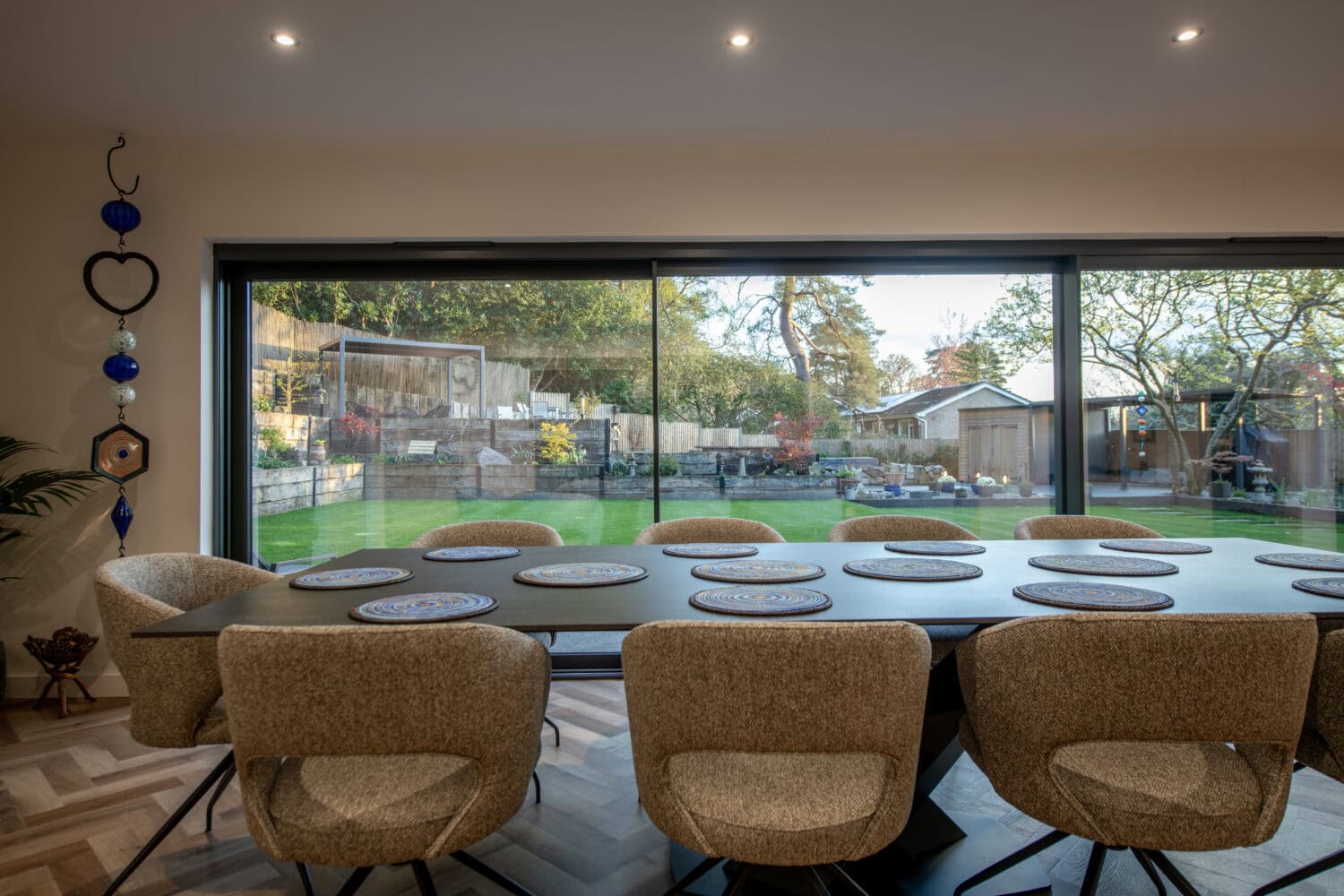
Kitchen sliding doors maximise the amount of glass, allowing daylight to move deeper into the room. Slim aluminium frames reduce visual obstruction, helping the space feel brighter throughout the day. Frameless sliding doors in particular reduce visible framing to a minimum, allowing near uninterrupted views and drawing the eye outward.
Benefits include:
- Increased daylight across worktops and dining areas
- A more open feel without structural changes
- Reduced reliance on artificial lighting during the day
- Clearer views that shift with the seasons
For many homes, this simple change has a noticeable impact on how the kitchen is used and enjoyed.
2) Improve Flow Between Inside and Outside
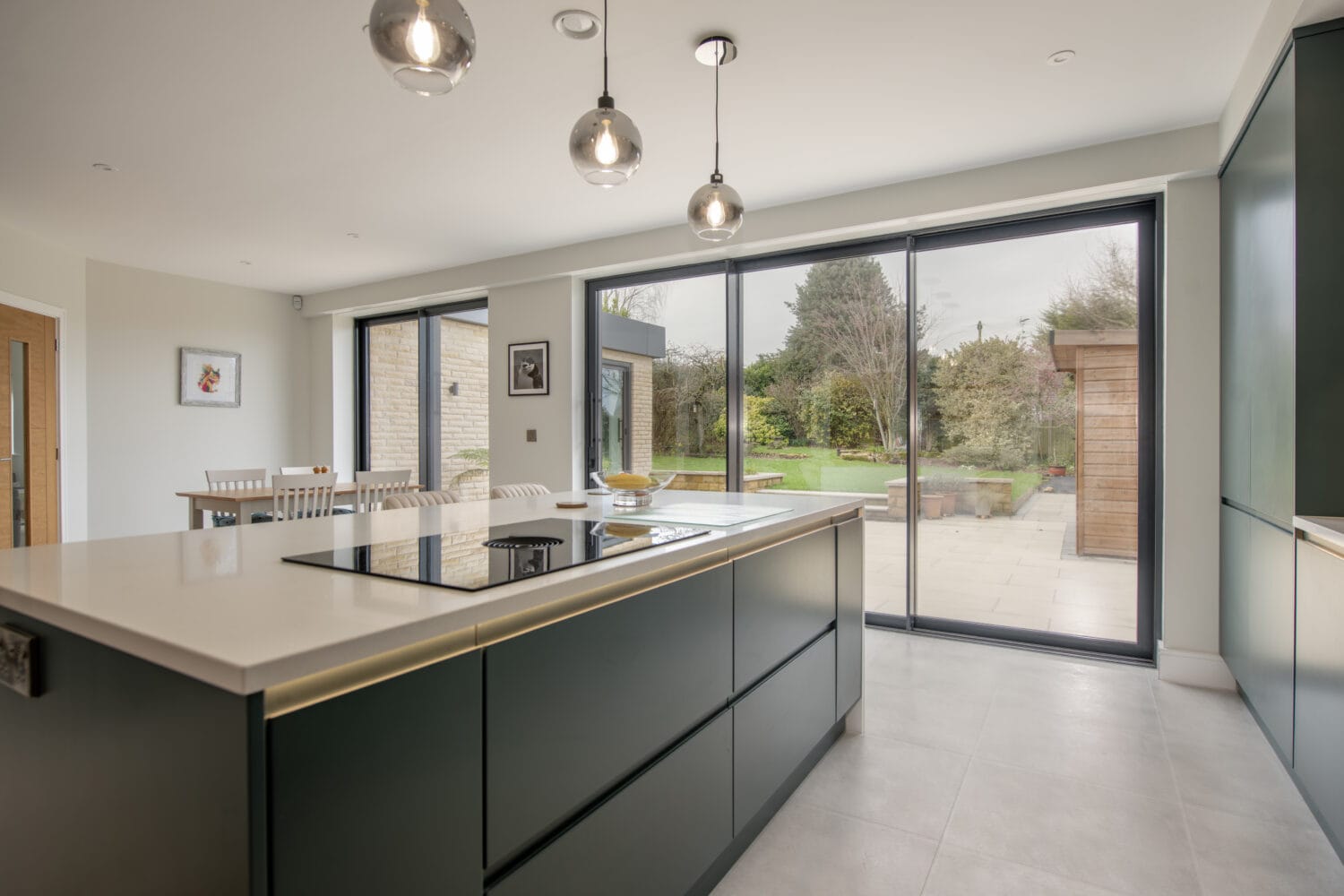
One of the key advantages of sliding kitchen doors is how effortlessly they connect interior and exterior spaces. When opened, the panels glide neatly aside, allowing easy access to the garden or patio.
This is particularly useful for:
- Family gatherings and entertaining
- Summer dining with doors open
- Children moving between house and garden
- Everyday use of outdoor areas
Even when closed, kitchen sliding patio doors maintain a visual link outside, helping the space feel less enclosed.
3) Achieve a Clean and Balanced Look
Glazing plays a defining role in how a kitchen looks and feels, influencing both light and spatial clarity. Kitchen sliding doors are particularly effective in this respect, introducing wide expanses of glass and uninterrupted sightlines that create a sense of openness and visual calm. By reducing breaks in the view, they help the space feel more ordered and connected.
Aluminium sliding doors enhance this effect through their slim profiles and structural strength. They support larger glass panels with minimal framing, allowing light to flow more freely while maintaining a clean, balanced aesthetic without unnecessary visual weight.
Achieving this level of refinement relies on thoughtful design choices:
- Coordinate frame colours with other windows and doors to ensure consistency throughout the home
- Opt. for neutral finishes that remain timeless rather than trend-driven
- Align glazing proportions with the architectural lines of the extension
- Keep surrounding materials and finishes simple to avoid visual distraction
Taken together, these elements establish a kitchen that feels composed, and effortlessly well balanced.
4) Make the Most of Your Kitchen Layout
Unlike hinged or bifolding options, a sliding door for kitchen spaces does not require internal or external clearance to open. Panels move along a track, which helps preserve usable floor space.
This can support:
- More flexible furniture placement
- Better use of compact kitchens
- Clear walkways and circulation
- A cleaner overall layout
For small kitchen extensions where space planning matters, this detail can make a noticeable difference.
5) Support Modern Kitchen Extensions
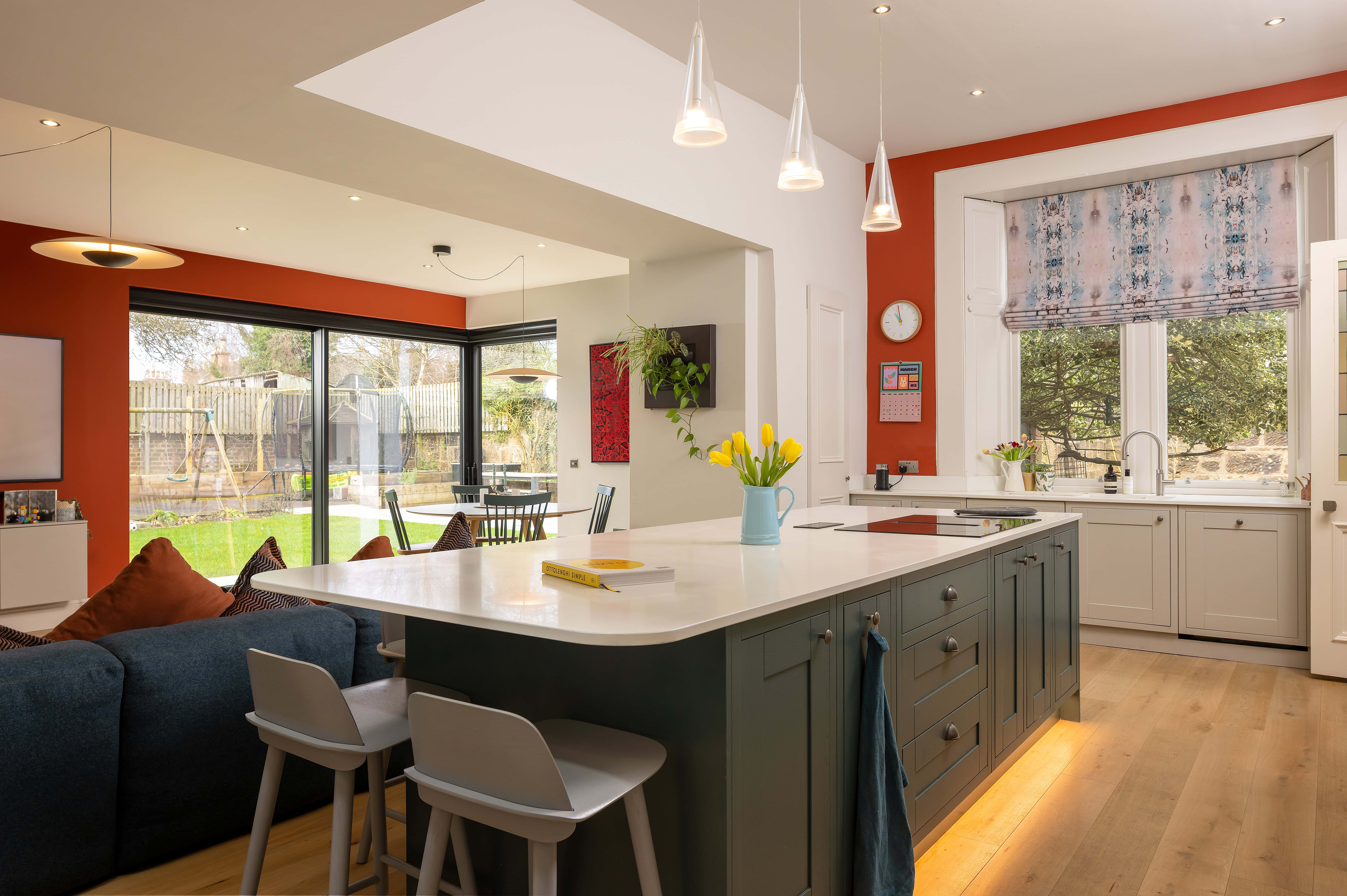
Kitchen extension sliding doors are a common feature in contemporary home projects. They help define the rear elevation and influence how the new space connects to the rest of the property.
In many extensions, sliding doors are used to:
- Frame garden views as a focal point
- Bring light into deeper floor plans
- Complement rooflights or fixed glazing
- Maintain a consistent material palette
Lift and slide patio doors are often used in larger extensions where wider or taller openings are required. Their robust mechanism supports heavier glass panels while maintaining ease of use.
When paired with sleek aluminium windows, they help unify the design across the extension and existing house.
6) Enjoy Smooth and Reliable Operation
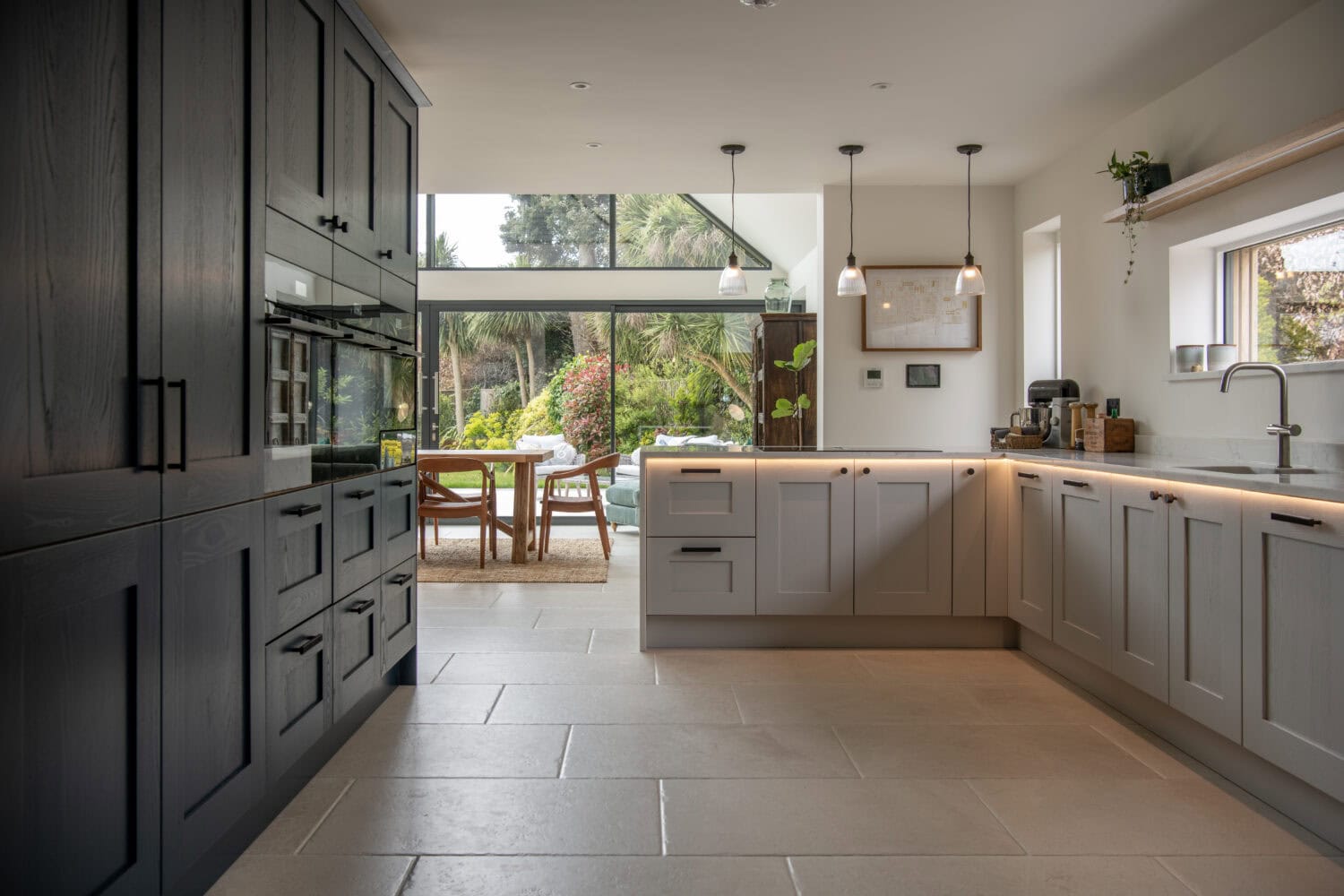
A high-quality sliding kitchen door is designed for ease of use. Panels move along precision-engineered tracks, allowing them to glide with minimal effort.
This is important for daily living, especially in busy kitchens where doors are opened frequently.
Key features often include:
- Soft close mechanisms
- Durable rollers and tracks
- Secure locking systems
- Large panel options without compromising movement
With expert, professional installation, sliding doors remain reliable over time with little maintenance.
7) Durable Materials for Long Term Value
Material choice plays a key role in performance. Aluminium sliding doors are widely used in kitchen projects due to their durability and consistency.
Advantages of aluminium include:
- Resistance to warping and weather exposure
- Stable colour finishes over time
- Minimal maintenance requirements
- Strength that supports larger glass panels
This makes aluminium a strong option for homeowners looking to invest in long term improvements.
8) Improve Energy Efficiency
Modern kitchen sliding doors are designed with energy performance in mind. Double or triple glazing, thermal breaks, and quality seals help reduce heat loss.
This can support:
- More stable indoor temperatures
- Reduced draughts near glazing areas
- Improved comfort during colder months
- Better overall efficiency of the home
When specified correctly, sliding kitchen doors contribute to a well-insulated kitchen without compromising on light or views.
9) Add Value to Your Home
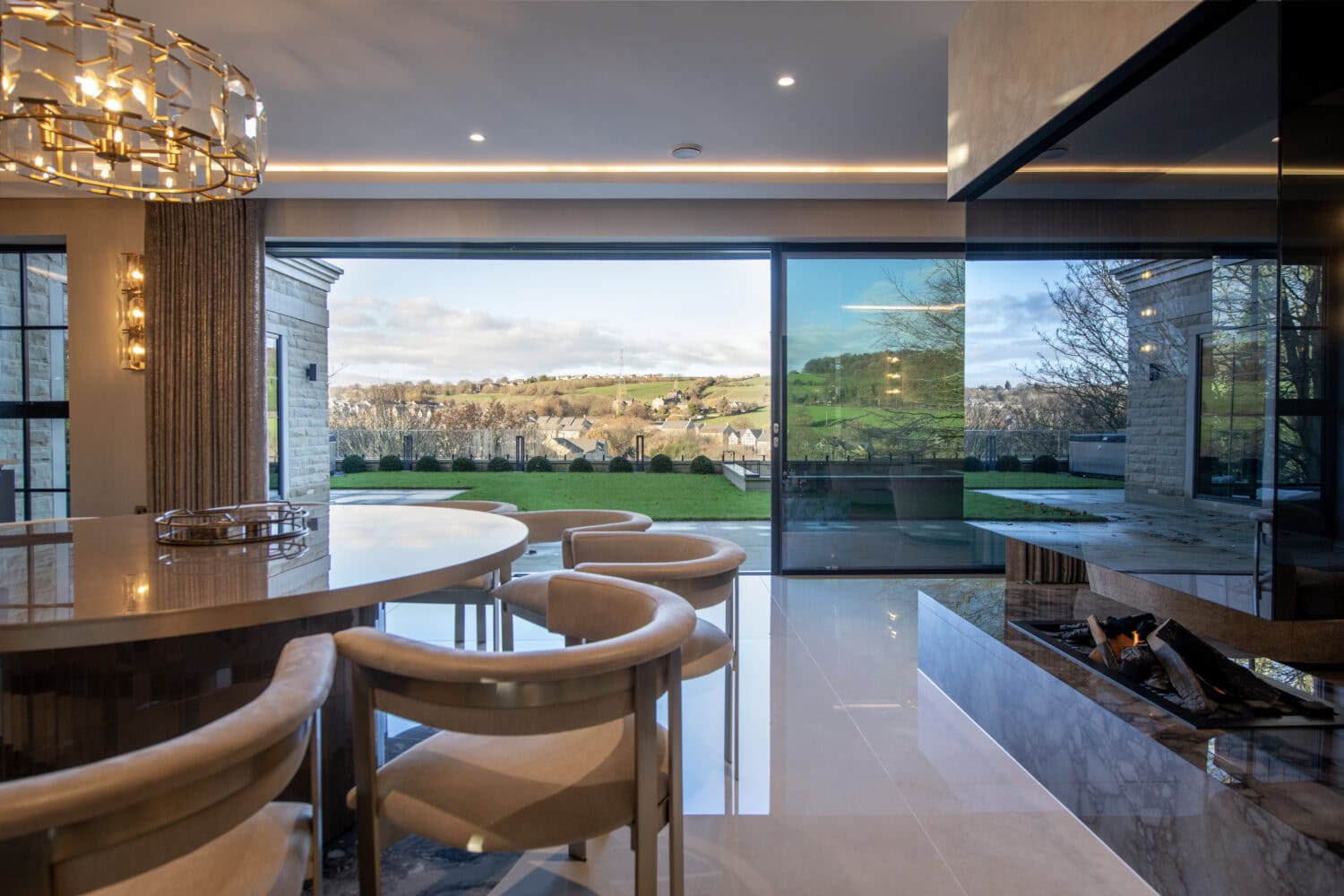
Kitchen upgrades are known to influence property value, and glazing plays an important part in this. Kitchen sliding doors are often seen as a desirable feature, especially in homes with garden access.
They can:
- Improve first impressions of the rear elevation
- Support modern living preferences
- Make spaces feel larger and brighter
- Appeal to future buyers
As part of a wider home renovation, they contribute to both daily enjoyment and long-term return on investment.
Expert Insight from Express Bi-Folding Doors
“Our customers often come to us looking to improve their kitchens, and glazing is always a key part of that conversation,” says Steve Bromberg, Managing Director at Express Bi-folding Doors. “Kitchen sliding doors bring in light, improve flow, and help the space feel more connected to the garden. With the right design, they support both how the kitchen looks and how it works every day.”
FAQs
Are kitchen sliding doors suitable for smaller kitchens?
Yes. Because the panels slide rather than swing, they do not take up additional space. This makes them a strong option for compact layouts where every metre counts.
What is the difference between sliding doors and bifold doors?
Sliding doors move along a track and keep a fixed number of panels visible. Bifold doors fold and stack to one side, opening a wider gap but requiring more clearance.
Do kitchen sliding doors keep heat in during winter?
Modern systems are designed with thermal efficiency in mind. With quality glazing and installation, they help retain heat and reduce draughts.
Are aluminium sliding doors better than uPVC?
Aluminium offers slimmer frames, greater strength, and longer lasting finishes. This allows for larger glass panels and a more refined appearance.
Can I use sliding doors in a kitchen extension?
Yes. Kitchen extension sliding doors are commonly used to open up the rear of the property and connect to outdoor space.
Kitchen sliding doors bring together light, space, and ease of use in a way that supports modern living. With slim frames, wide glazing, and smooth operation, they help kitchens feel more open and connected to the outside.
For homeowners planning a renovation or extension, kitchen sliding doors offer a considered solution that improves both layout and comfort over time. By choosing high quality aluminium sliding doors and aligning them with the overall design of the home, the result is a kitchen that feels balanced, bright, and ready for everyday life. Visiting an Express Bi-folding Doors showroom helps bring these plans into focus, with full size displays, working sliding and bifold doors, and open plan kitchen settings that allow you to experience different configurations, finishes, and glazing options in person.


