TRANSFORMING HOMES SINCE 2007
MADE IN BRITAIN
NATIONWIDE SUPPLY & INSTALL SERVICE
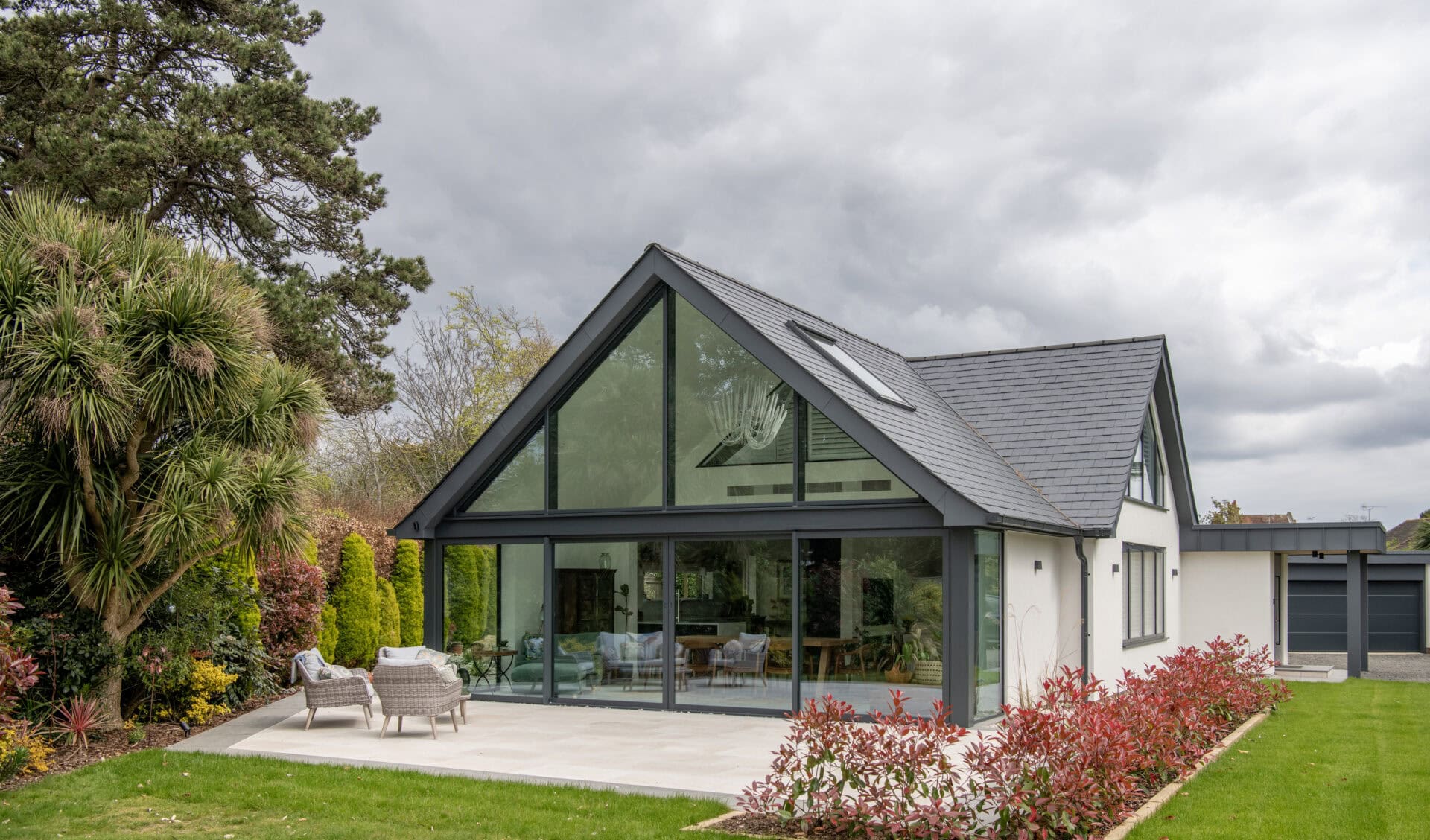
Sliding patio doors play an important role in modern homes, shaping how light, space, and outdoor areas are experienced. Inline sliding doors and lift and slide patio doors are two of the most popular options, offering similar visual impact but differing in operation, scale, and performance.
While the differences may seem subtle at first, factors such as ease of use, panel size, and sealing become far more noticeable once the doors are part of everyday life. This guide compares both systems to help you choose the right solution for your opening, setting, and lifestyle.
What are Lift and Slide Patio Doors?
Lift and slide patio doors are designed for wide and tall openings where large glass panels are required. Their defining feature is the integrated lift and slide mechanism, operated using a single handle.
Turning the handle lifts the panel slightly, taking the weight off the rollers and allowing it to move smoothly, even at large sizes. When closed, the panel lowers back into position, compressing the seals and locking securely.
Lift and slide doors can also be locked in a partially open position, supporting controlled ventilation and keeping panels fixed during busy periods. Here at Express, slim sightlines are available, with 2 and 4 panel configurations offered on a twin track system and vertical sightlines as narrow as 20mm.

Understanding Inline Sliding Doors
Inline sliding doors are a more conventional sliding patio door system. Panels sit on double or triple tracks and slide horizontally behind one another, remaining in contact with the rollers at all times.
Our range of inline sliding patio doors are available in 2, 3, 4 and 6 panel configurations, making them suitable for a wide range of opening sizes. Thermally broken aluminium frames provide the strength needed to support large, glazed panels while maintaining exceptionally slim profiles.
This system remains popular due to its straightforward operation and flexibility, particularly in extensions and renovations where opening sizes are more standardised.
Key Comparisons
Sightlines
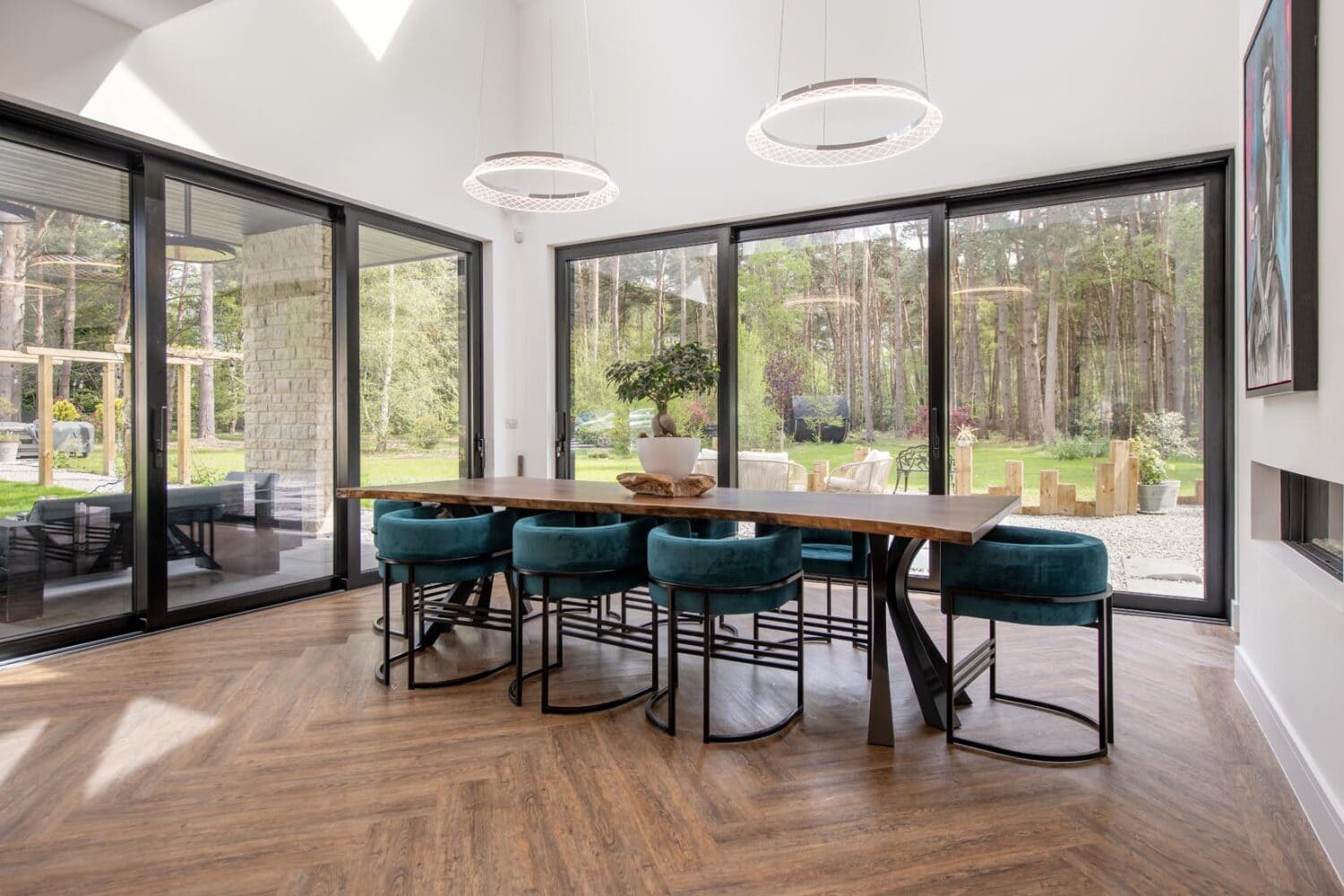
Sightlines play a key role in how sliding doors are experienced. Inline sliding doors, especially frameless sliding doors, are often chosen for their ability to deliver near uninterrupted views. Slim meeting sections and minimal visible framing help draw attention outward.
Lift and slide patio doors also support expansive views, particularly across large elevations. While their frames are generally deeper, this depth supports much larger glass panels. Twin track designs with slim vertical sightlines allow lift and slide doors to achieve wide views without visual bulk.
In short: inline sliding doors prioritise minimal framing, while lift and slide doors support greater scale.
Operation & Ease of Use
In day-to-day use, the operational differences between the two systems become more noticeable. Lift and slide doors raise the panel slightly before it moves, reducing friction and making even large, heavy doors feel light to operate. This makes them ideal for wide openings used regularly. They’re especially popular with families, as the door can be locked in the open position to help prevent trapped fingers, and with older homeowners who appreciate how effortless the movement feels.
Inline sliding doors move smoothly along a fixed track, with the rollers supporting the panel at all times. For standard-sized openings, they offer a simple, familiar sliding action. Frameless inline options are particularly popular for their clean look and minimal detailing, alongside their easy operation.
In short: lift and slide doors make larger panels easier and safer to use, while inline doors offer a simple, familiar sliding action.
Thermal Performance
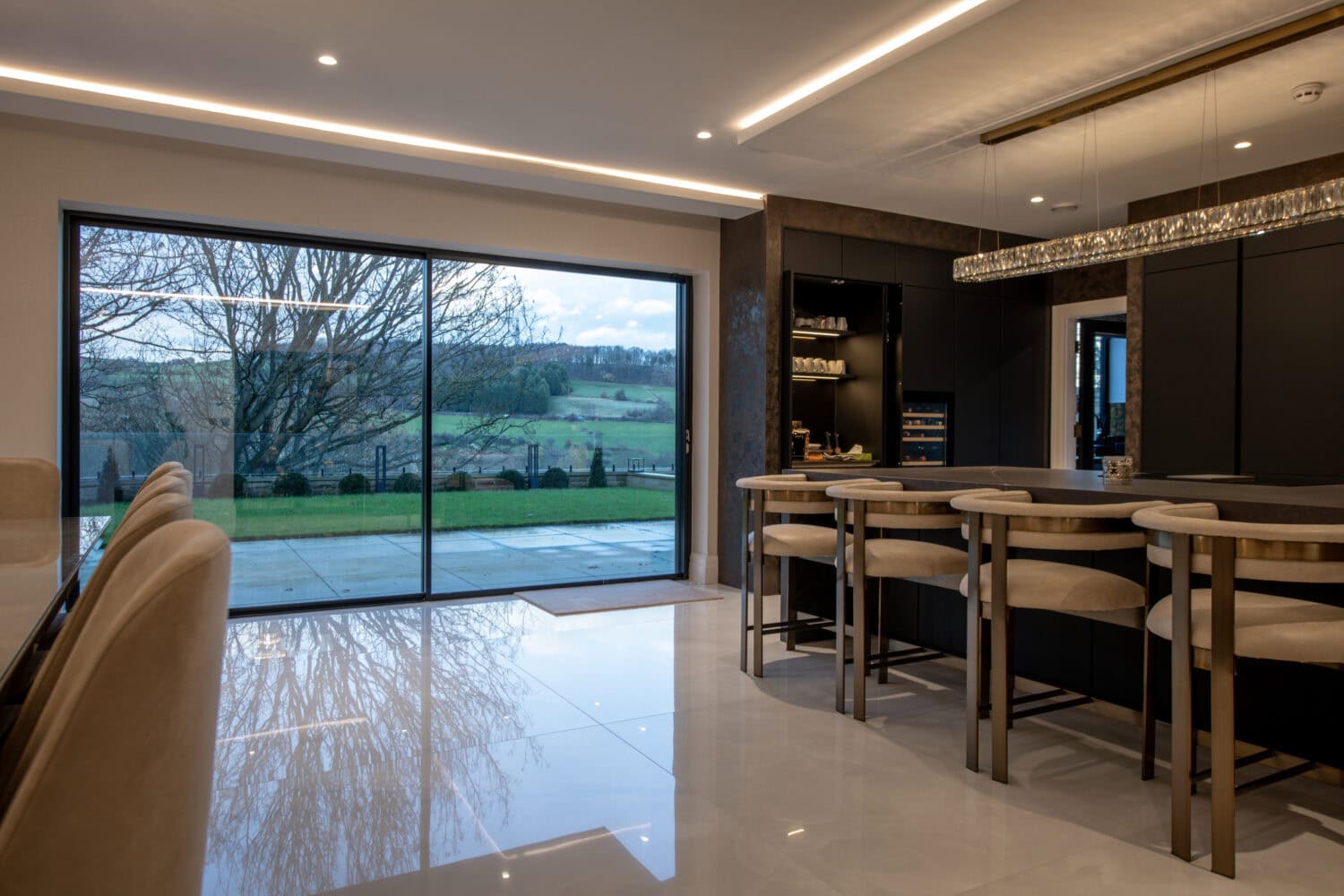
Both inline sliding doors and lift and slide patio doors can deliver excellent thermal performance when specified correctly.
Modern systems use thermally broken aluminium profiles combined with high-performance double or triple glazing to reduce heat loss and help maintain comfortable internal temperatures year-round. When installed properly, both options can achieve strong insulation values, supporting energy efficiency without compromising on large glass areas.
While overall performance depends on glazing choice, frame design, and installation quality, neither system has a clear advantage in this area. The right specification matters far more than the opening style itself.
In short: with the correct glazing and profiles, both inline and lift and slide doors offer reliable thermal comfort for modern homes.
Weather Resistance & Maintenance
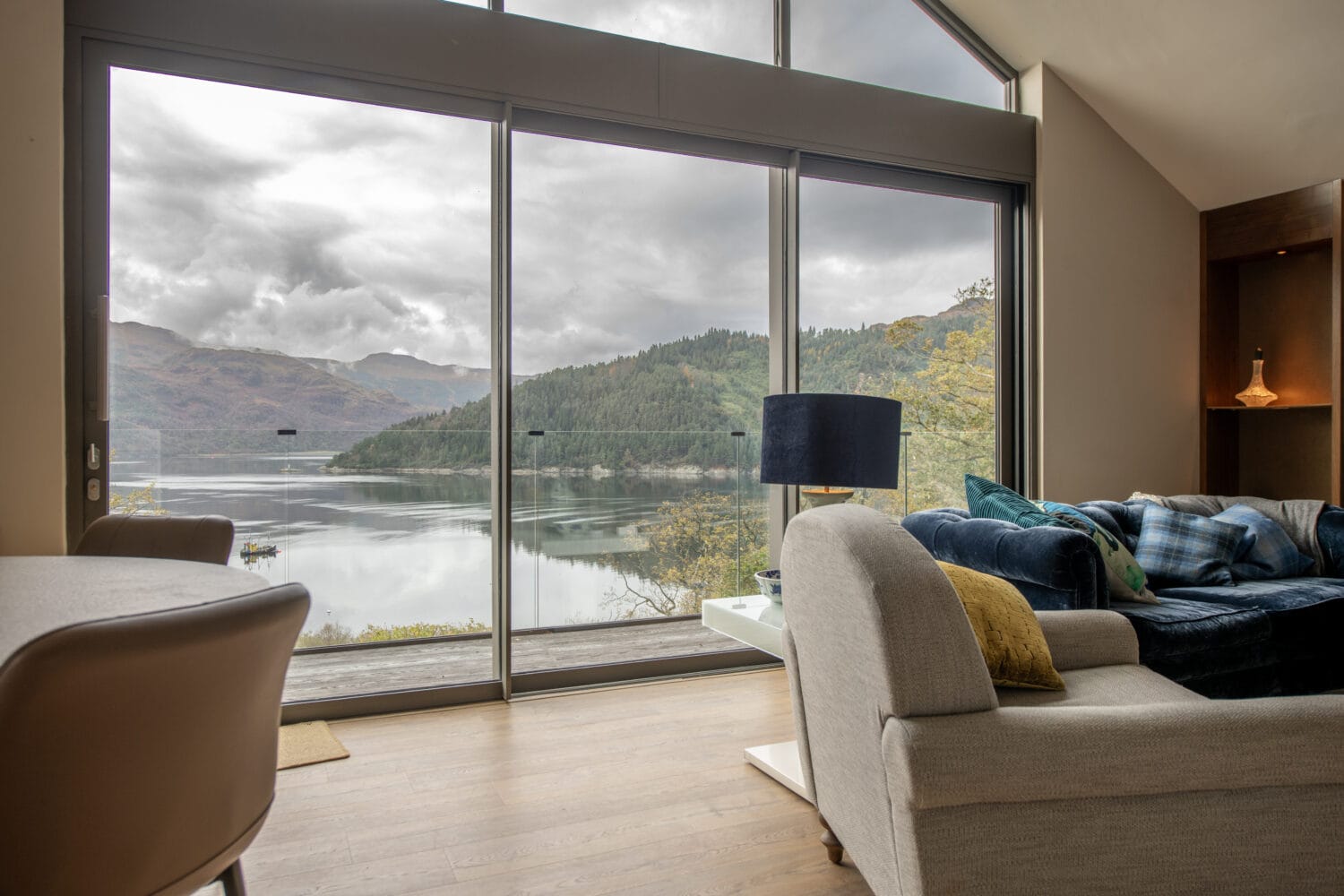
Weather performance becomes increasingly important for exposed properties, where wind, rain, and temperature fluctuations place greater demands on door systems. In these conditions, lift and slide patio doors perform particularly well. Their deeper sliding sash and robust locking mechanisms draw the panel tightly into place when closed, establishing a highly effective weather seal.
Strong protection can also be achieved with inline sliding doors, especially when drainage channels and track design are well engineered and kept in good condition. When manufactured from high-quality aluminium and correctly installed, both of these systems can deliver a dependable, long-lasting performance.
In short: lift and slide doors provide added reassurance where weather resistance is a priority.
Design & Aesthetic
Where minimal detailing and visual simplicity are the priority, inline sliding doors are a natural fit. Slim-profile and frameless designs work particularly well in contemporary interiors, allowing clean architectural lines and uninterrupted views to take centre stage.
Larger openings place different demands on design, and this is where lift and slide patio doors excel. Their ability to accommodate tall or wide glazing makes them a popular choice for extensions and new builds where scale and proportion are central to the overall concept.
At Express, all sliding door systems are bespoke and highly customisable, with over 200 RAL colours and a wide range of premium finishes available to suit both modern and traditional schemes.
As Managing Director Steve Bromberg explains:
“Both inline sliding doors and lift and slide patio doors serve distinct purposes. The right choice is usually driven by the size of the opening, the setting of the property, and how the space needs to function on a day-to-day basis.”
In short: design intent, scale, and everyday use usually determine which system is the best fit.
Cost & ROI
For standard-sized openings, inline sliding systems are generally the more cost-effective option on a like-for-like basis. Their simpler mechanism helps keep upfront costs lower, making them a popular choice for projects that prioritise budget control alongside clean, contemporary design.
A higher initial investment is typically required for lift and slide systems due to their more advanced operating mechanism and heavier-duty components. In return, they offer long-term value through the ability to span wider openings, remain easy to operate under heavier loads, and deliver consistent performance over time.
Both options increase natural light, improve indoor-outdoor flow and contribute positively to overall property ROI when specified correctly.
In short: both systems deliver strong return on investment.
FAQ
What glass options are available for sliding doors?
Both inline sliding doors and lift and slide patio doors are available with double or triple glazing, including toughened and solar control options.
How do I maintain sliding doors?
Keep tracks clean, remove debris regularly and check drainage channels to maintain smooth operation, particularly with frameless designs.
Lift and slide patio doors and inline sliding doors each offer distinct benefits. Inline systems, including frameless sliding doors, prioritise minimal framing and clean views, while lift and slide patio doors support large scale openings with ease.
Ultimately, the right choice is guided by the size of the opening, the architectural intent of the space, and how the doors will be used day to day. Exploring both options in person can make these differences far clearer. Visit one of our showrooms and speak with our expert team for tailored advice on selecting the sliding door system that best complements your home.
Discover these products
XP GlideXP Glide RDouble Sliding Patio DoorsTRIPLE-TRACK SLIDING PATIO DOORSLift & Slide Doors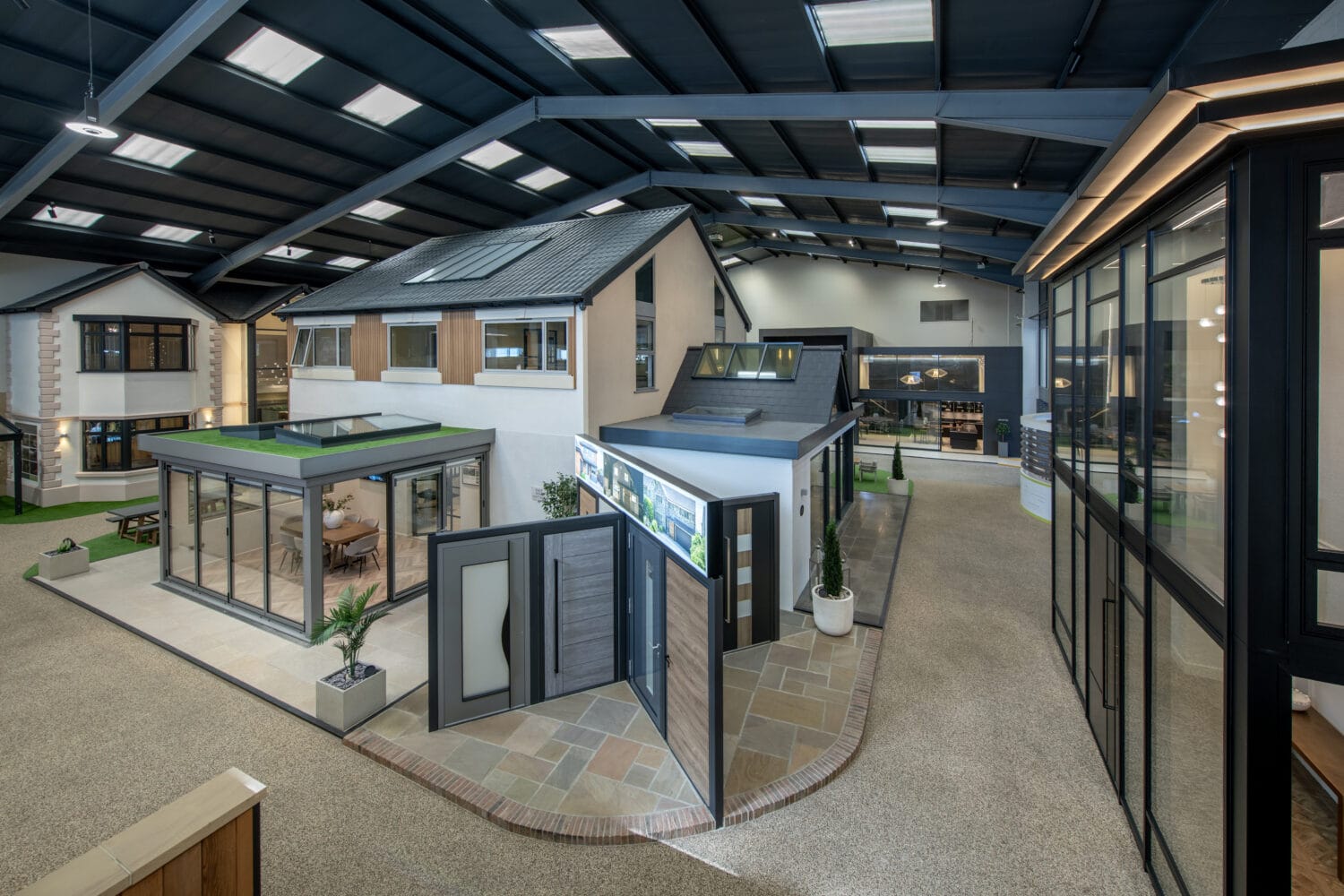
come and see for yourself
There’s nothing like seeing a quality product first hand so if you want to explore the differences between our lift and slide doors, in-line sliding doors and the various options within each range then there’s no better place to visit than any of our showrooms.