TRANSFORMING HOMES SINCE 2007
MADE IN BRITAIN
NATIONWIDE SUPPLY & INSTALL SERVICE
Bifold Doors vs Sliding Doors: How to Choose the Right System for Your Home
Bifold Doors
Lifestyle
Sliding Doors
Bifold Doors vs Sliding Doors: Which Suits Your Home?
Choosing between bifold doors vs sliding doors is one of the first decisions homeowners face when planning a rear extension or garden-facing renovation. Both systems open a wall of glass to the garden, but they do it in different ways, and the right choice depends on your opening width, how you use the space and the view you want to keep uninterrupted. At Express Bi-Folding Doors we manufacture and install both systems nationwide, so here is a practical comparison to help you decide.
Bifold doors vs sliding doors: the key difference
The core difference between bifold and sliding doors comes down to how the panels move. Bifold doors fold back concertina-style against one or both sides of the opening, stacking neatly to one side. Sliding doors run on a track and glide horizontally, overlapping or tucking behind a fixed panel. Both can span wide openings, but the way they handle glass, sightlines and partial ventilation is genuinely different.
If you are planning a kitchen extension, garden room or full-width rear renovation, this decision affects more than aesthetics. It influences how much of the opening you can use at once, how the room feels day to day, and how the doors perform in poor weather.
Below we compare bifold doors and sliding doors across the areas that matter most: how they open, the glass you see, thermal performance and running costs.
1) How each system opens
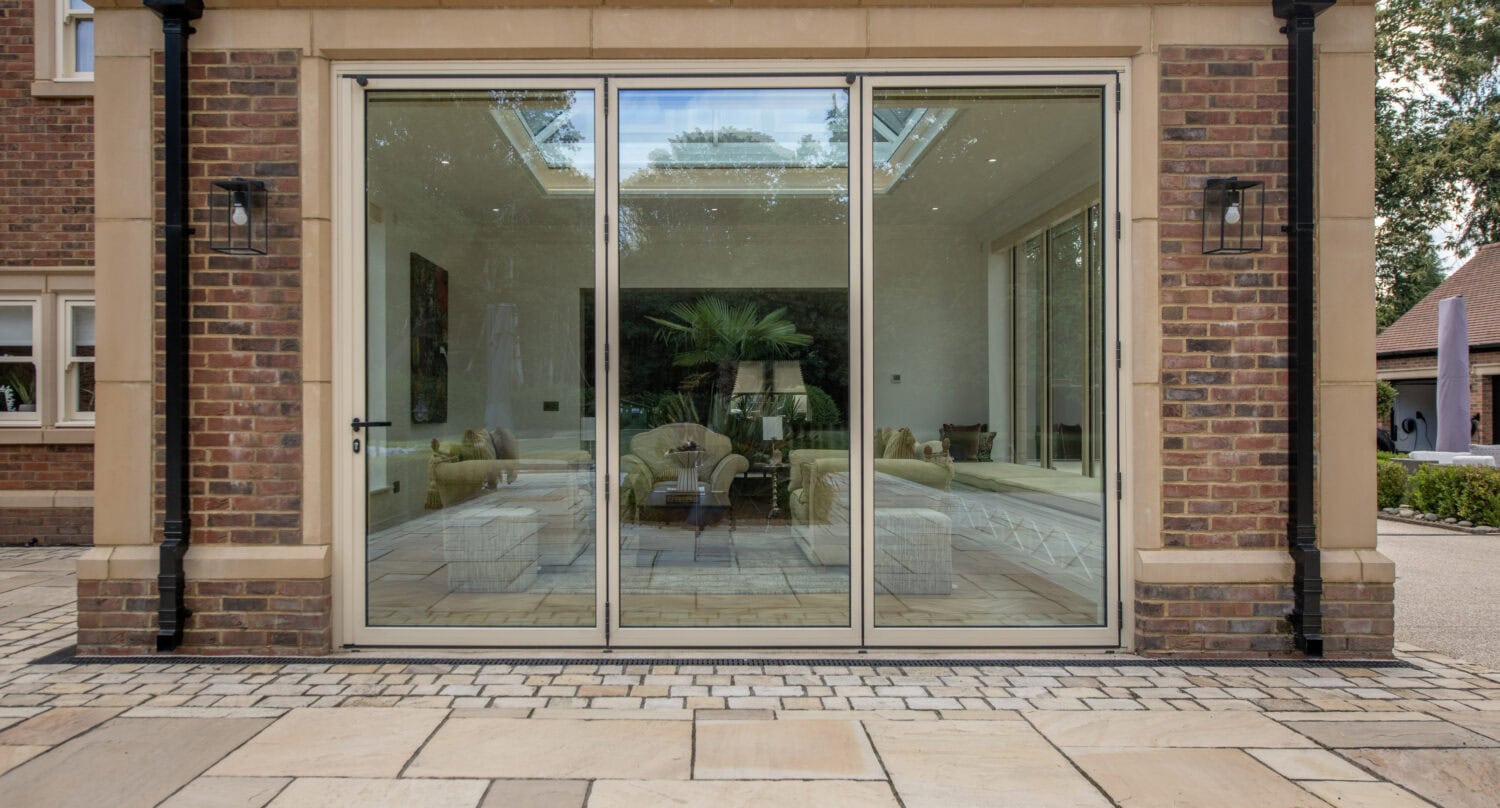
Bifold doors fold in a concertina action, with each panel roughly 600-1000mm wide. This means you can open the full width of the doors, wall to wall, which suits homeowners who want to fully connect an extension to the garden for entertaining. Our XP10 bi-folding doors and XP88 bi-folding doors both offer this full-opening configuration.
Sliding doors move horizontally along a track. Even at their widest, one panel typically remains fixed or overlaps another, so you rarely get a completely uninterrupted opening in the way bifolds provide. What sliding doors do offer is effortless day-to-day use, since a single panel can glide open with one hand for quick access to the garden.
2) Glass and sightlines
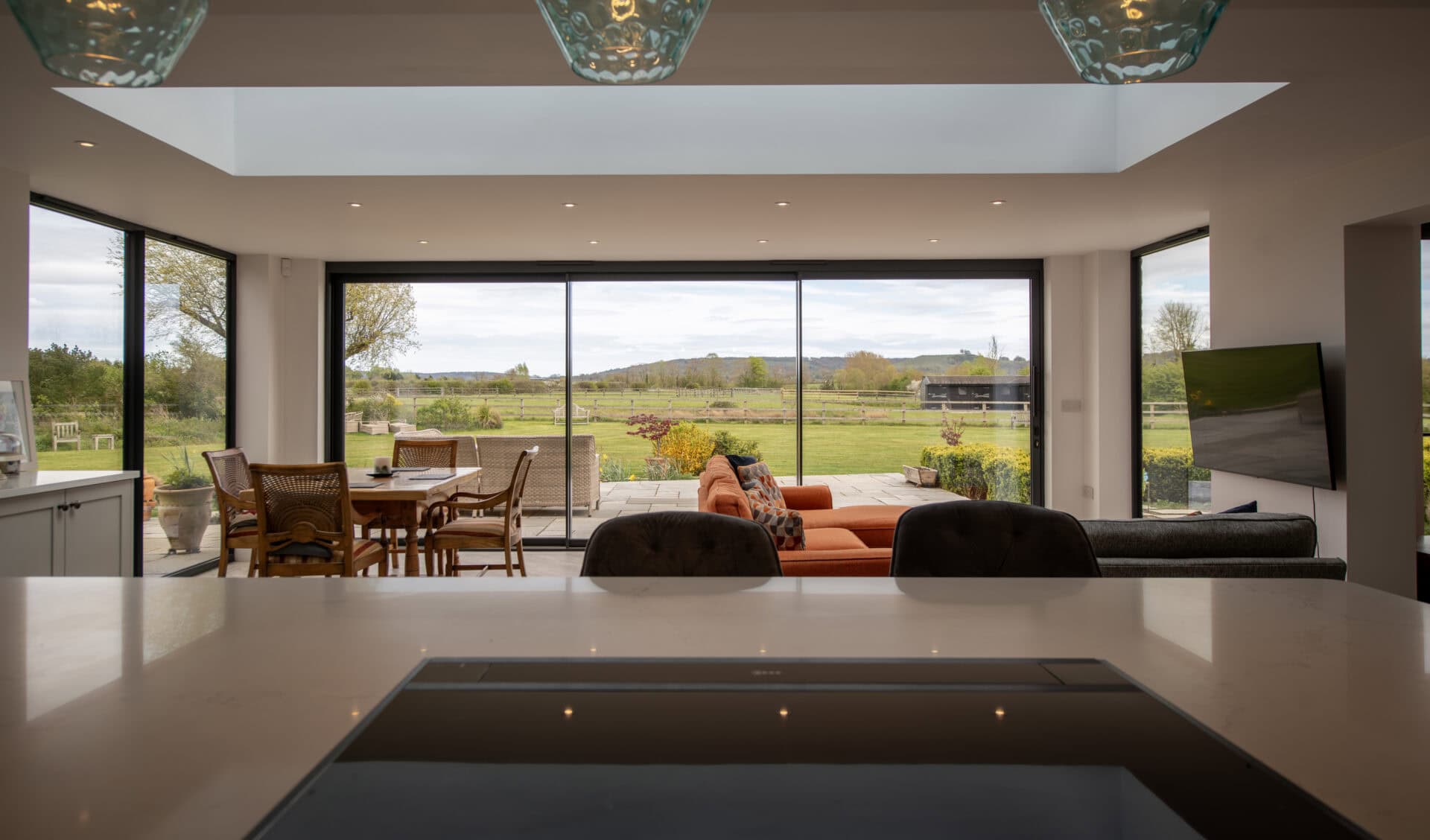
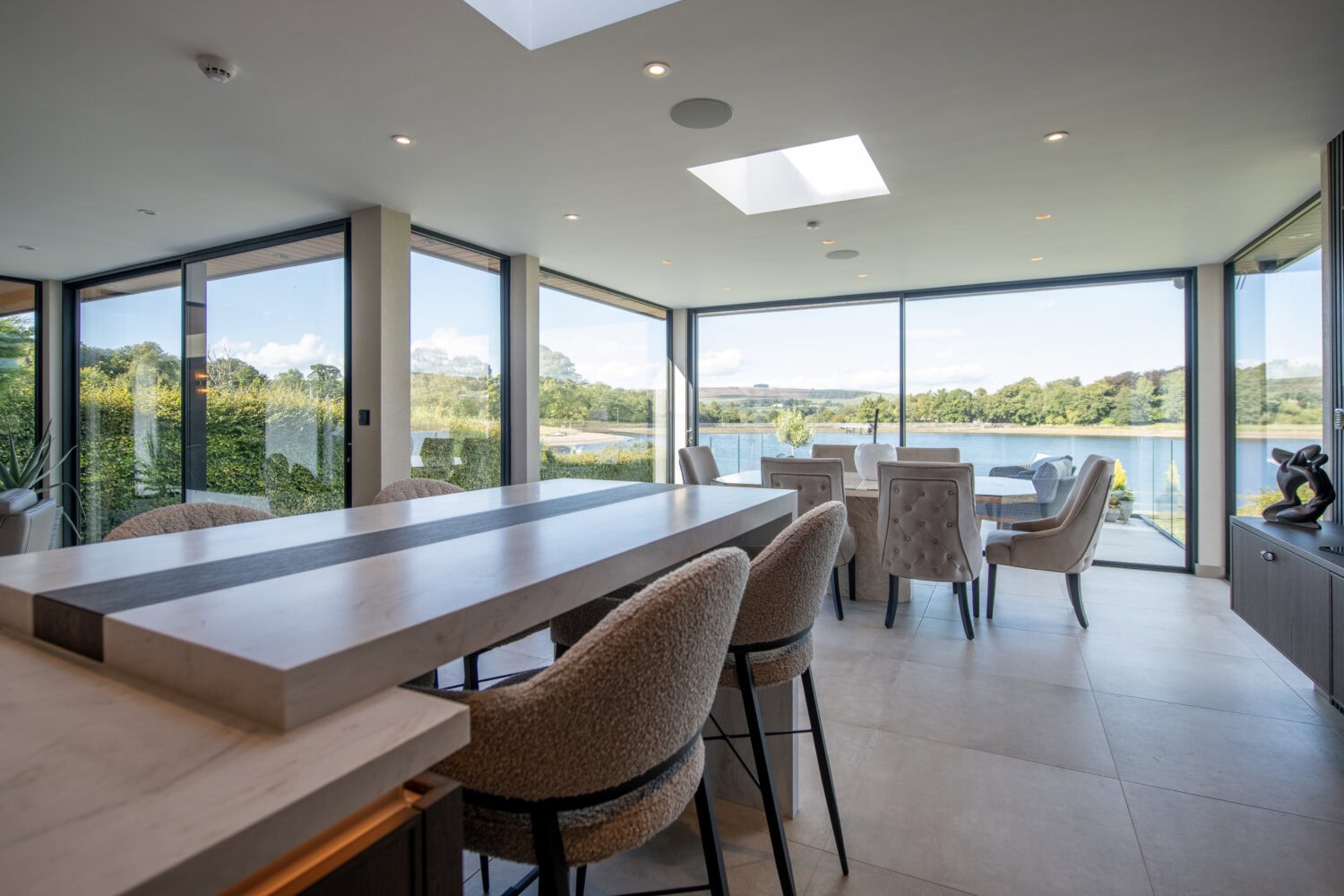
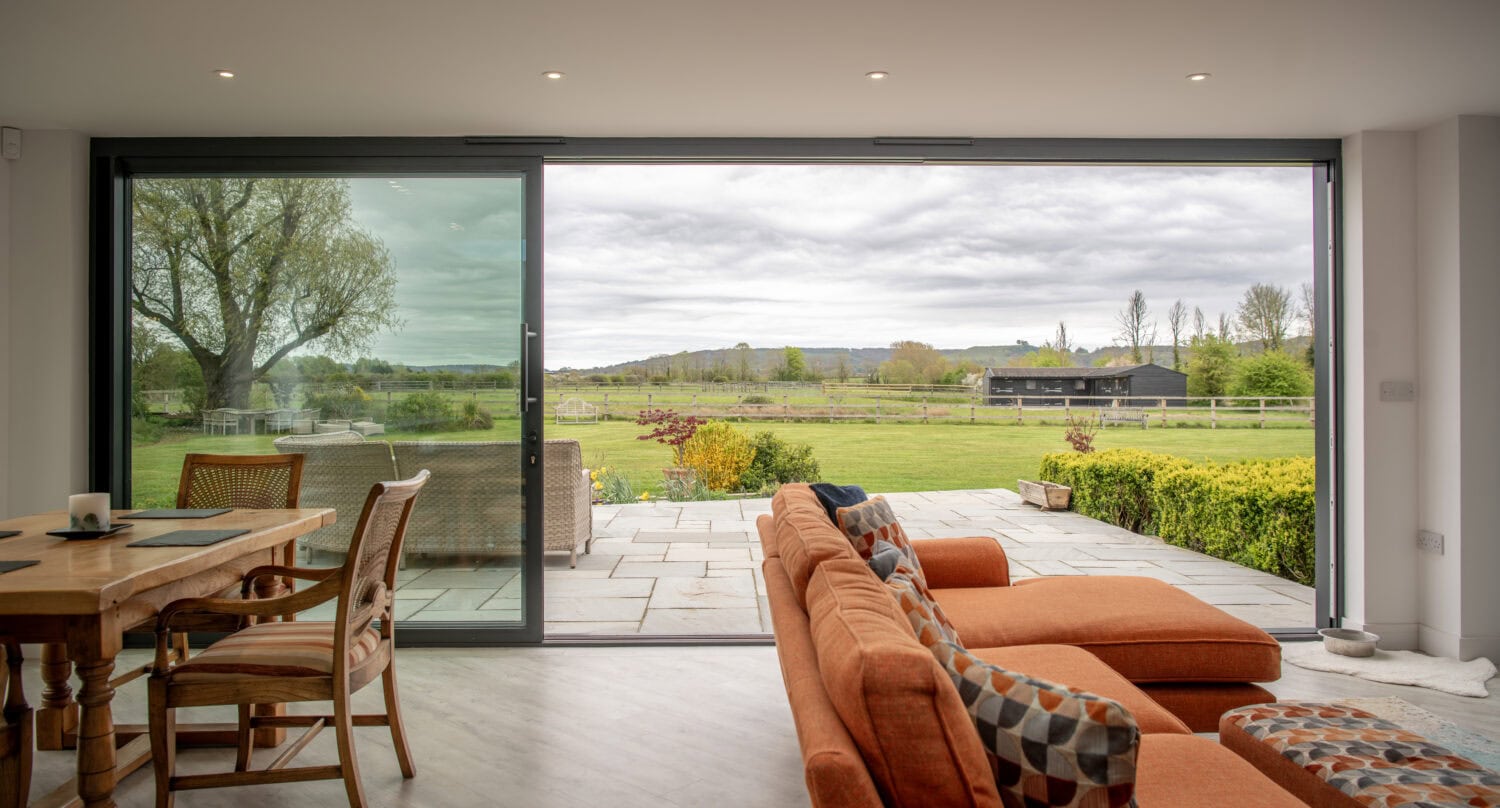
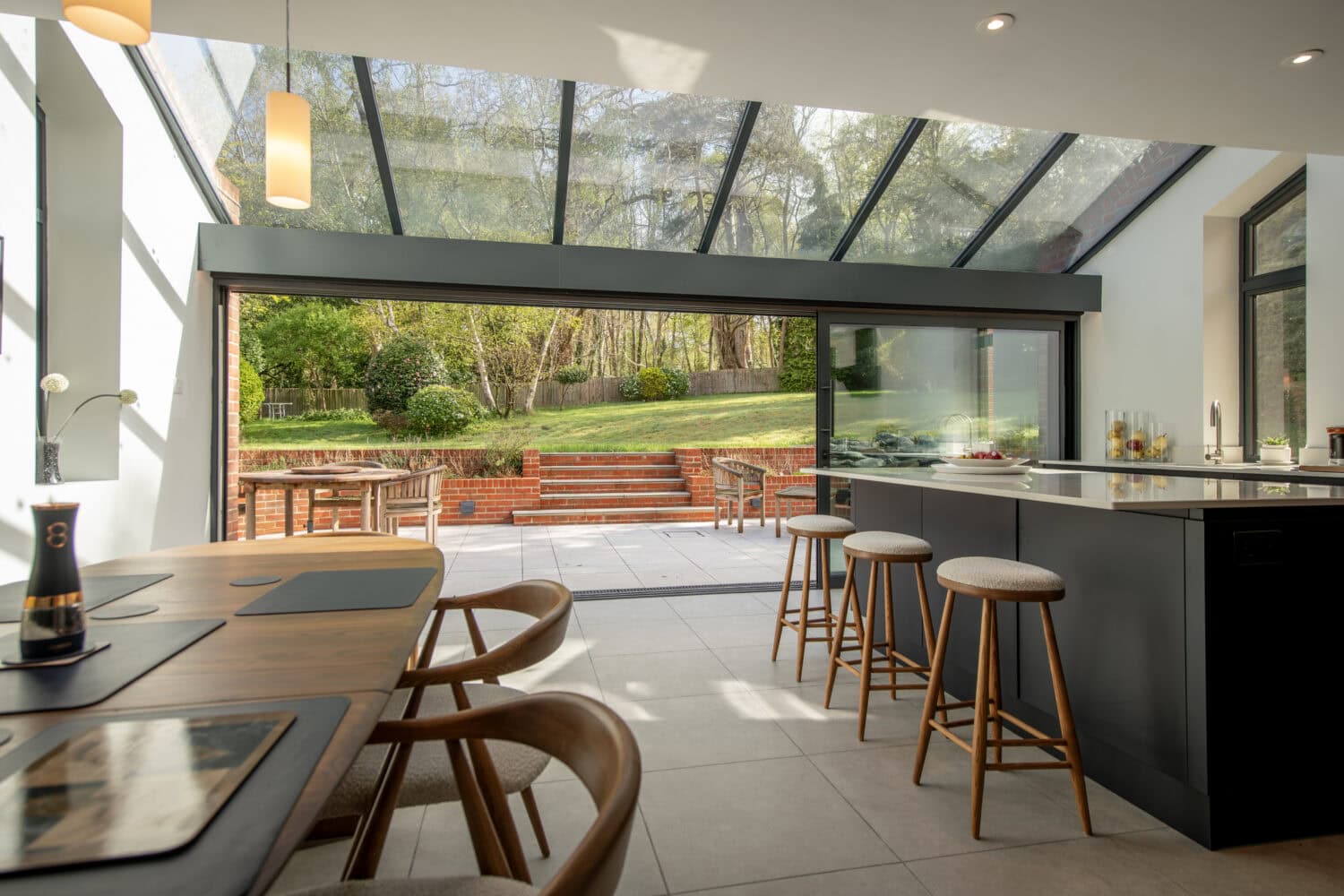
Sliding doors generally win on sightlines. Because the panels are large and the frames slimline, systems like XP Glide and XP Slide Panoramic+ give a wide, uninterrupted view of the garden when closed, with narrow vertical frame lines between panels.
Bifold doors have a frame every 600-1000mm when closed, which some homeowners find visually busier than a sliding system, though many like the rhythm it brings to a large glazed wall. If an unbroken view is the priority and you do not need to open the full width regularly, sliding doors are usually the better fit.
Choose bifold doors if:
- You want to open the full width of the opening for entertaining or garden parties
- You like the folded stack look when open
- Your opening is narrower than around 4 metres
- You want the flexibility to open just one or two panels for ventilation
Choose sliding doors if:
- An uninterrupted view of the garden matters more than a full-width opening
- You want the slimmest possible sightlines
- Daily use with minimal effort is a priority
- Your opening suits a 2, 3 or 4-panel track configuration



3) Thermal performance and weather sealing
Both systems, when specified with quality aluminium framing and double or triple glazing, perform well thermally. Aluminium bifold and sliding doors from Express are built with thermally broken frames, which separate the internal and external aluminium to reduce heat transfer.
Sliding doors, with fewer moving joints per metre of opening, can offer slightly tighter weather sealing along the running track. Bifold doors use compression seals at every panel junction, which modern systems like XP10 handle well, though it is worth checking seal quality on any bifold system you are comparing.
4) Space and practical access
Bifold doors stack to one side when open, which takes up some internal or external space depending on how they are hung. This is worth checking against furniture layouts or planting close to the opening. Sliding doors need a running track the full width of the opening but do not project into the room or garden when open, since the panel simply slides behind a fixed pane.
For a single door used mainly for quick access, such as a utility room or side return, a sliding configuration is often more practical than a full bifold set.
5) Track systems and configurations
Both systems come in a range of configurations. Bifold doors are typically specified in 3, 4, 5 or 6-panel sets depending on the opening width, with the option to include a single access door within the set for everyday use without opening the whole run.
Sliding doors are available in 2, 3, 4 and even 8-panel layouts across twin, triple or quadruple track systems, letting you match the configuration to the width of your opening and how much of it needs to open at once.
6) Cost considerations
Pricing depends heavily on the opening width, glazing specification, colour finish and number of panels rather than the system type alone. As a general rule, bifold doors carry a higher cost per panel due to the additional hinges, running gear and compression seals at each junction. Sliding door systems, particularly larger panel configurations like XP Slide Panoramic+, can carry a premium for slimline sightlines and larger glass units. Get an accurate figure by requesting a quote for your specific opening.
“In nearly twenty years of fitting bifold and sliding doors across the UK, the question I get asked most in the showroom isn’t which system looks better, it’s which one actually gets used. Families who love to entertain tend to choose bifolds, because opening a full wall to the garden does something a sliding door cannot quite replicate. For a lot of our customers though, especially on narrower openings or where the view matters more than the width, sliding doors win out. I always tell people to come and operate both in the showroom before deciding, because a spec sheet only tells half the story.” – Steve Bromberg, Managing Director
Which is right for your home?
There is no single better option between bifold doors vs sliding doors. If you want to open your home fully to the garden for entertaining and have the width to suit, bifold doors are hard to beat. If an uninterrupted view and effortless daily use matter more, sliding doors are usually the better fit. Many of our customers combine both across a single project, using sliding doors for a main living space and a smaller bifold set elsewhere. Visit one of our showrooms to see both systems side by side before deciding.
Bifold vs Sliding Doors
Are bifold doors more expensive than sliding doors?
Not always. Cost depends on panel count, glazing specification and finish rather than the system type alone. Bifold doors often carry a higher cost per panel due to the extra hinges and running gear, but a large sliding door with panoramic glass can cost more overall than a modest bifold set.
Can I open just part of a bifold door?
Yes. Most bifold configurations can include a single traffic door within the set, letting you step in and out without opening the full run.
Which system is better for a narrow opening?
Sliding doors can be argued to suit narrower openings better, since even a 2-panel configuration provides a clean, functional opening without the stacking space bifold doors need.
But here et Express we believe bi-folding doors are better as the full clear opening provides more of a wow factor than a modest sized sliding door.
Do sliding doors let in less light than bifold doors?
Not necessarily. Sliding systems like XP Slide Panoramic+ use large glass panels with slim sightlines, which can let in as much or more light than a bifold configuration of the same overall width.
Can bifold and sliding doors both be made in the same colour?
Yes. Both systems are available in a wide range of RAL colours and dual-colour finishes, so bifold and sliding doors used elsewhere on the same property can be colour-matched.

Explore the differences for yourself
The best way to explore the different benefits of bi-fold and sliding is to compare them directly and there’s no better place to do that than in any of our fantastic showrooms, the perfect shopping destinations if you’re looking for ideas for your home, carrying out a renovation, extension, moving home or building a new property.
See bifold and sliding doors side by side
Visit your nearest showroom or request a free quote to compare both systems in person.


